Today, I’m doing a quick blog that will hopefully distract
you from the Jeter love-fest that’s been going on. Don’t forget, there is another dude retiring –
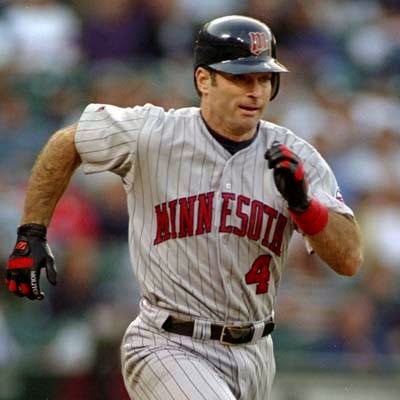
Paul Konerko. Konerko has been a solid,
consistent player for the past 15 years with the Chicago White Sox. While I don’t really have time to go into a
full on examination of his career, I wanted to find out if Paul Konerko was a
Hall of Famer. I really wanted it to be
closer, but when you compare against a few other players, the answer is a solid
probably not.
Comparing him against fellow White Sox' teammate and Hall of Famer Frank Thomas, Hall of Fame hopeful but probably not Fred McGriff, another fellow White Sox' teammate Jim Thome, and Hall of Famer Johnny Mize, you can see that Konerko doesn't really stack up against those guys.
Konerko just didn't have the combination of things that really puts some of these other guys over the top. He didn't hit 500 home runs. That's not necessarily an automatic entry into the hall nowadays, but it certainly would have helped. He didn't strike out an excessive amount - his career high was 117 in 2004 - but that being the case, the voters probably would want a higher batting average.
Mize didn't get into the hall through regular voting. He was elected by the Veteran's Committee. You have to remember that Mize lost three full seasons to military service though. And look at that strikeout to walk ratio.
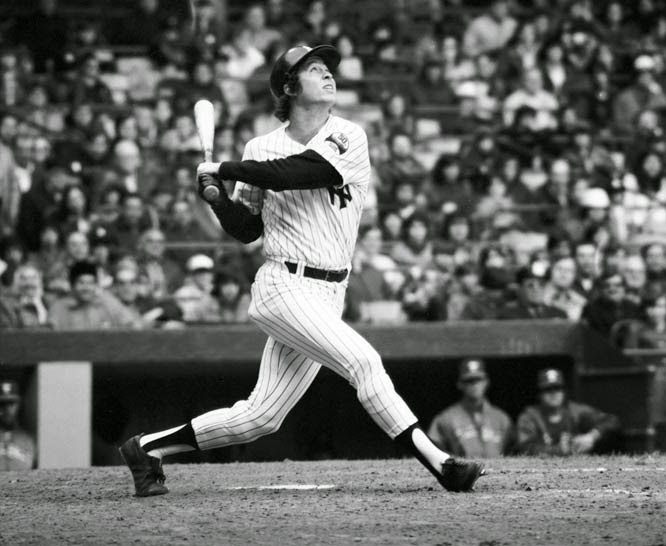
In 1998, the Cincinnati Reds traded Konerko to the White Sox for Mike Cameron. What if instead the Reds had traded him to the Yankees? Maybe for Ricky Ledee? Come on Reds fans, doesn't that sound like a trade they would make? Or maybe for Paul O'Neill. Bring him back to Cincinnati to finish his career and provide some veteran leadership.
So, if Konerko went to the Yankees, would he be a Hall of Famer? The Tino Martinez era was pretty brief in New York. He would be gone by the end of 2001. The Yankees then wouldn't have had to sign Jason Giambi. Konerko would have just been able to hit in the best lineup in the first half of the 2000's. He almost certainly would have had better numbers, and the shine associated with playing in New York and the number of World Series rings would had definitely bolstered his cause (Don Mattingly would like to point out that BOTH of those things are necessary).
No, Paul Konerko isn't a Hall of Famer. But let's not just sit back and watch #2 get all the glory these last few days of the season.
Friday, September 26, 2014
Thursday, September 25, 2014
The Day Mark Whiten and Lonnie Maclin Set Career Highs
Being a St. Louis Cardinals fan, there’s not much that I
care to remember from the early 1990’s.
But there’s one thing that I’ll never forget, and that’s Mark Whiten’s
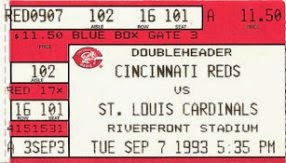
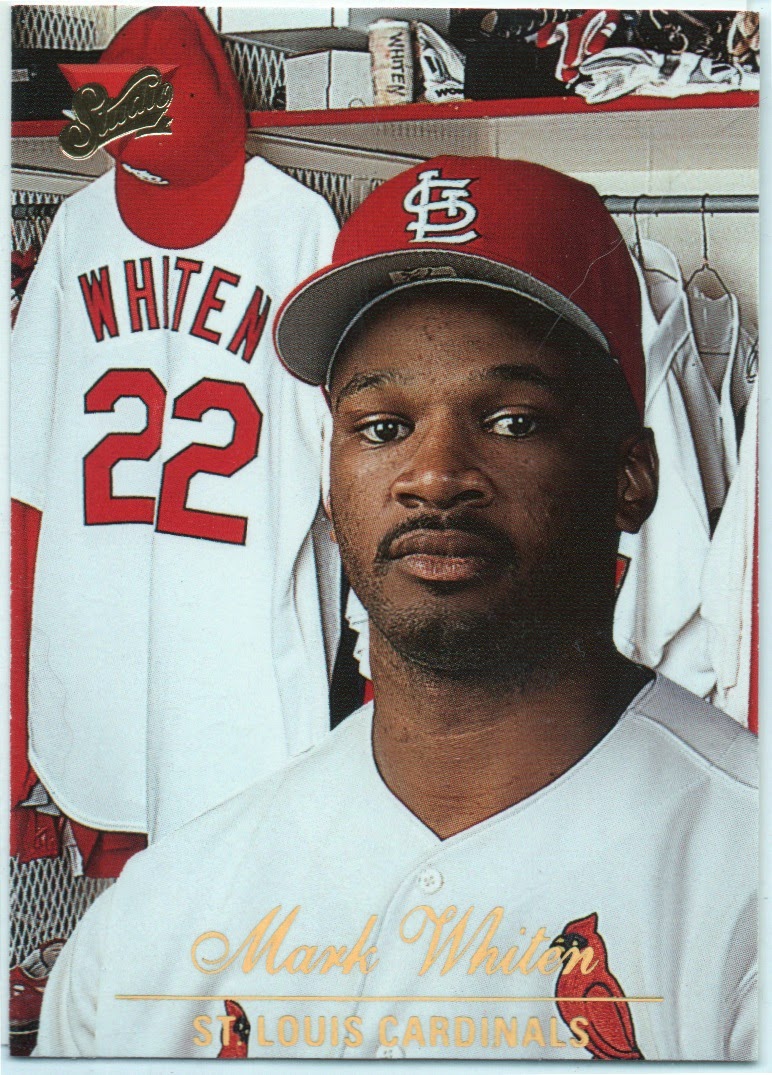
four home run game on September 7th, 1993.
This was actually the second game of the day. The Cardinals lost the first game 14-13 to
the Cincinnati Reds. In the top of the
eighth, the Cardinals exploded for seven runs, turning a 9-6 deficit into a
13-9 lead. They actually had runners at
second and third base with one out with seven runs in, but for some reason,
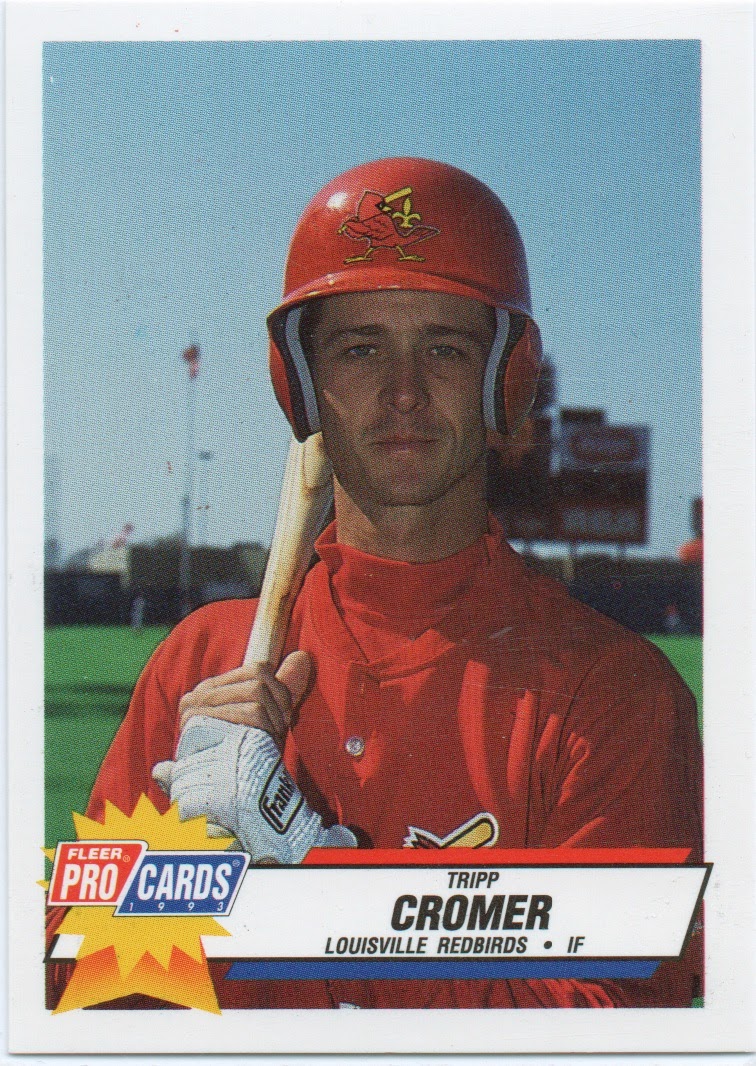
Stan Royer didn’t attempt to score on Tripp Cromer’s groundout to second, and
then Luis Alicea struck out looking to end the inning. Actually, I think I remember that exact
scenario unfolding watching the Louisville Redbirds in 1989. Anyway, Mark Whiten had a small part in the
eighth inning action, drawing a bases loaded walk off of Scott Ruskin, scoring
Gregg Jefferies, earning his first RBI on the day.
The Reds would score three runs in the bottom of the eighth
off of a Dan Wilson bases loaded single and a Jack Daugherty sac fly. Jefferies would single, steal a base, and
advance to third on a sac fly in the top of the ninth, but he was stranded there
after Jeff Reardon got Bernard Gilkey to pop out to second base to end the
inning. In the top of the ninth, Jacob
Brumfield doubled with one out, and Hal Morris followed that with a walk. Reggie Sanders then finished it off of Todd
Burns with a triple to end the game.
Whiten quickly put his learnings from Pensacola Junior College to work,
deducing that the Cardinals would need to score more than 14 runs if they were
to win the nightcap. He sat down between
games with Lonnie Maclin and quickly went to work on a plan to do just that.![]() |
| This is beautiful. You can see all four levels of seats in old Cardinal Stadium. |
The Reds would keep the momentum from the first game going
in the bottom of the first. Thomas
Howard led off with a walk, followed by a double from Brumfield. Morris then hit a sac fly, scoring Howard,
and then Brumfield scored after stealing third and an error on the throw from
Pagnozzi. After that point, though, Bob
Tewksbury was pretty much lights out. He
went the distance, allowing no more walks or runs, and only six more hits. After the first inning, it was Cardinals 4,
Reds 2.
The next three innings were scoreless affairs, with a Maclin strikeout and Whiten pop out sprinkled in, so let’s fast forward to the fifth inning. In the top half of the frame, Tewksbury would lead off with his second walk of the day. He advanced to second on a wild pitch, and then Pena bunted him over. That’s when Maclin summoned his inner Whiten and hit a sac fly to center field, scoring Tewksbury. Brumfield would single off of Tewksbury in the bottom half of the inning, but that was it for the Reds. Cardinals 5, Reds 2.
Mike Anderson relieved Reds starter Larry Luebbers to start
the sixth inning. Anderson promptly
walked Zeile and Perry to start the inning.
That’s when Whiten decided to get halfway to the home run cycle, hitting
a three run shot, giving him seven RBIs on the day to that point. Rounding the bases, he gave a big salute to
Maclin, as they were now over halfway to their goal of scoring more than 14
runs. With tears in his eyes at the
beauty of the unfolding plan, Pagnozzi grounded out to short. Cromer and Tewksbury went down quietly as
well, and the Reds failed to make any noise in the bottom of the frame. Cardinals 8, Reds 2.
Anderson remained in the game to start the top of the
seventh inning for the Reds. After Pena
struck out, Maclin fouled out to third base.
Shamed by this, Maclin hung his head and went back to the dugout. Whiten, always a
glass-two-thirds-of-the-way-full kind of guy, told him to keep his head up, and
actually ordered some nachos for him from a vendor close by. While this was happening, Gilkey and Zeile
singled, setting up Perry for an RBI single.
Whiten, batting gloves still slathered in nacho cheese, deposited another
ball over the wall, giving him three home runs and 10 RBIs on the day to that
point. While running around the bases,
Whiten spelled out M-A-C-L-I-N, YMCA-style.Surprisingly, Whiten’s third dinger of the day didn’t knock Anderson out of the game. That came a batter later, when Pagnozzi singled. Chris Bushing entered the game and retired Cromer to end the top of the inning. Brian Dorsett would pinch hit and single for Bushing in the bottom of the inning, but that was it for the Reds. Cardinals 12, Reds 2.
Rob Dibble entered the game in the top of the eighth for Cincinnati. Tewksbury struck out before Pena swelled up and hit a home run. Maclin was the next batter, but the only thing that he could do was ground out to second. Maclin was no Whiten. He knew it, Whiten knew it, the nacho vendor knew it. At that point, Whiten autographed his cleats and gave them to Maclin (they weren’t actually his cleats; they were Jim Lindeman’s cleats from 1989 that fell behind the industrial washing machines). The Reds couldn’t get anything going in the bottom of the eighth. Cardinals 13, Reds 2.
Dibble remained in the game in the ninth. Royer struck out to start the frame, but then Perry singled to center field. Whiten
came up and did the only thing he could do.
He hit a home run. He rounded the
bases cleatless, wanting Maclin to believe that he actually gave him his cleats
an inning earlier. Whiten now had four
home runs and 12 RBIs on the day, and the plan that he and Maclin sat down and
concocted had come to fruition. They had
scored more than 14 runs. Whiten was the
last baserunner of the day for either team.
The Cardinals won 15-2.Whiten and Maclin both achieved career highs that day for RBIs in a game. Maclin’s one RBI was the only RBI of his career. Whiten’s 12 RBIs tied fellow Cardinal Jim Bottomley for most in a game in major league history. He also tied the Padres’ Nate Colbert for most RBIs in a double header with 13. His four home runs also tied several players for most in a game.
Whiten set career highs in 1993 in games played, at bats, runs, hits, home runs and RBIs. He was also player of the week twice that season. The first time was the week of July 18th when he hit .385 with three home runs and nine RBIs (this was in four games in the short week of the All Star game). And of course, the second time was the week of September 12th, when he hit .321 with four home runs and 14 RBIs.
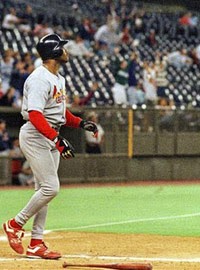
![]() |
| And thaaat was a 70 MPH fastball. |
Lastly, I would like to bring up the record for most RBIs in
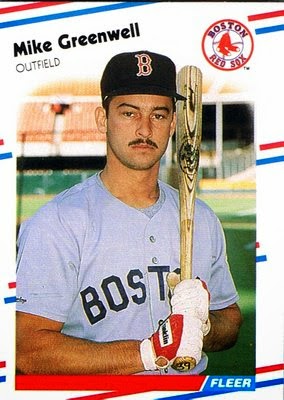
a game where a player accounted for all of his team’s runs. That feat was accomplished by Mike Greenwell
on September 2nd, 1996.
Greenwell knocked in all nine of the Red Sox’ runs in a 9-8, 10 inning
victory over the Seattle Mariners.
Manning left field for the Mariners that day? Mark Whiten.Sunday, September 21, 2014
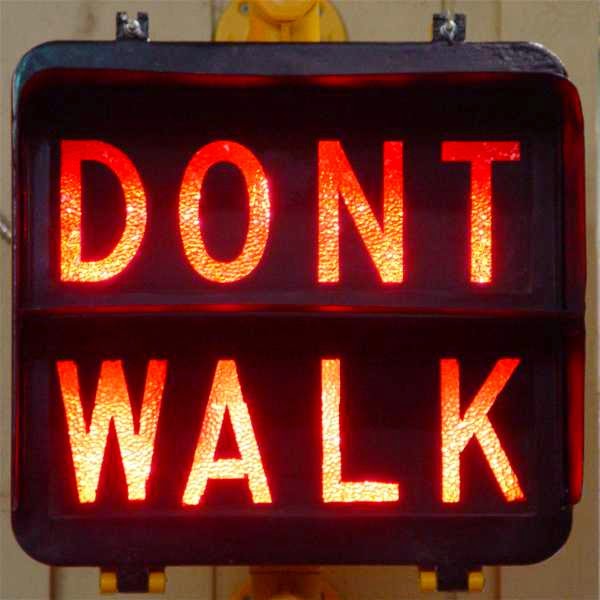
DONT WALK
Being somewhat of a grammar nazi, I’ve always looked at the
“Walk/Don’t Walk” sign with a bit of sadness.
There’s no apostrophe in the “Don’t”, I’m not sure who to tell, and it
probably wouldn’t matter anyway. I get
that there’s space consideration there, but couldn’t you just cut out an
apostrophe in the black? Isn’t there
just one big red light illuminating a cutout?
I don’t know. And nowadays, the
public schools have gotten so bad, they just go with white and red people. You don’t even have to read! But this is a baseball blog (hopefully fairly
grammatically correct). We’re not here
to talk about apostrophes. Today, we’re
going to talk about someone who took the DONT WALK sign to heart, Dan
Quisenberry.
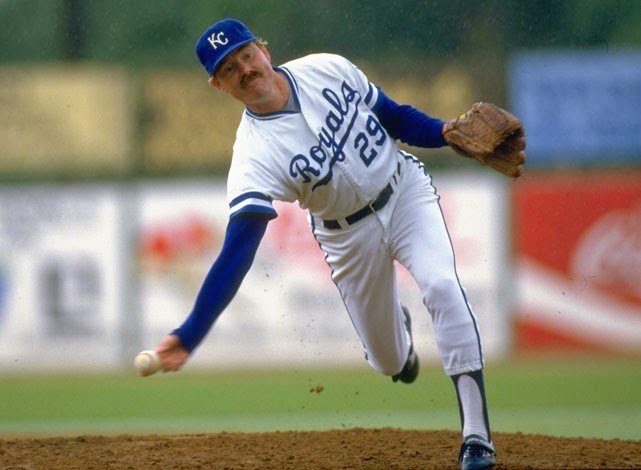
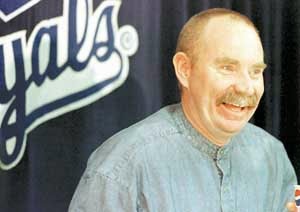
Quisenberry signed with the Kansas City Royals as a free
agent in June of 1975, out of the University of La Verne in La Verne, CA. The Leopards have produced a total of 10
major league players, but Quisenberry is the last one to have played in the
majors.
Upon his signing, the Royals assigned Quisenberry to A ball
Waterloo. It was there where he would
make his only professional start, which just happened to also be a complete
game. Overall there, he would go 3-2
with a 2.45 ERA and four saves with 31 strikeouts vs. just six walks (one
intentional) across 44 innings in 20 games.
This earned him a promotion to AA Jacksonville to finish the 1975
season. There, he went 0-1 with a 2.25
ERA and one save with two strikeouts vs. four walks (one intentional) across
eight innings in six games.
The Royals would give Quisenberry the same schedule in
1976. Starting again at Waterloo, he
went 2-1 with a 0.64 ERA and 11 saves with 19 strikeouts and nine walks (four
intentional) across 42 innings in 34 games.
Those numbers, plus a WHIP of 0.881, earned him another promotion back
to Jacksonville. There, he went 0-1 with
a 2.25 ERA and six strikeouts vs. four walks (two intentional) across 12
innings in nine games.
Quisenberry would spend the next two seasons in
Jacksonville, where he would combine to go 7-3 with a 1.17 ERA and 21 saves
with 62 strikeouts vs. 23 walks (eight intentional) across 138 innings in 81
games. He would be promoted to AAA Omaha
for 1979, where he would go 2-1 with a 3.60 ERA and five saves, with 16
strikeouts vs. 10 walks (one intentional) in 35 innings across 26 games.
The Royals finally came to their senses in early July. Quisenberry was called up, and he made his
Major th, 1979. In a 4-2 loss to the Chicago White Sox, he
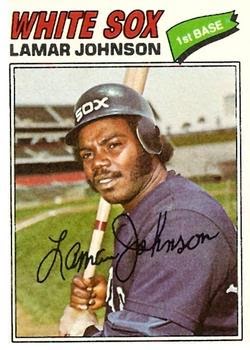
entered the game in the top of the seventh and induced a ground ball double
play off the bat of Lamar Johnson. In
the eighth, he allowed a single to Rusty Torres, who was quickly erased by
another ground ball double play off the bat of Greg Pryor. In the ninth, he allowed a double to Alan
Bannister amid three more groundouts. The
Royals tried to put something together in the bottom of the frame, with U.L.
Washington hitting a one out single to center field, but a Willie Wilson pop
out and George Brett ground out ended the day.
Quisenberry would pick up his first major league victory 14
days later in a 7-6 win over the Texas Rangers.
He allowed his first run in the bottom of the eighth, blowing the save,
but the Royals scored a run in the top of the ninth, and he shut the door in
the bottom of the frame. The next day,
he would get his first career save against the Rangers. Overall for his first half season in
baseball, one probably didn’t see this guy as a future dominant closer. He finished 3-2 with a 3.15 ERA and five
saves with 13 strikeouts vs. seven walks (five intentional) in 40 innings
across 32 games. He also added three
holds, but he had five blown saves. If
you look at his outings though, there were two instances where he gave up four
runs each in a total of three innings.
If you take those two outings out, his ERA falls to 1.46. In both of those outings, he allowed two home
runs. He only allowed one other home run
in the other 37 innings he pitched.
The 1979 Royals only had a total of 27 saves, and it took
six different pitches to achieve that total.
They finished the season 85-77, three games back of the California
Angels. If they were going to get over
the hump, they were going to need to do better than 27 saves. And so they did.
Quisenberry opened the 1980 season as the closer in Kansas
City, and never looked back. At the end
of May, he was having a pretty decent season, sitting at 3-2 with a 2.61 ERA
and eight saves. Two months later, at
the end of July, he was 7-4 with a 3.12 ERA and 20 saves. Then came August. He pitched in 18 games that month, going 4-1
with a 1.03 ERA and 11 saves, with only one blown save. The Royals were 16-2 in games in which he
pitched that month. He had 10 walks that
month, but seven of those were intentional, including three on the day where he
had his only blown save. He gave up a
run in the bottom of the ninth, allowing the Toronto Blue Jays to tie it at
three. Quisenberry would pitch FOUR MORE
INNINGS that day without allowing a run, before the Jays finally broke through
for a run in the bottom of the 14th inning off of Rawly
Eastwick. Shamed by the outing, Eastwick
would never pitch again for the Royals.
1981 wasn’t too bad of a season for Quisenberry. The strike that year really hurt him putting
up elite numbers, but it actually seemed to help him. Prior to the strike in mid-June, he was 0-3
with a 2.86 ERA and nine saves, with 11 strikeouts and nine walks (five
intentional). One of his losses came in
another five inning effort where he scattered nine hits and a walk, allowing
three runs in an 8-7 loss to the Boston Red Sox on May 4th. Sixteen days later, he lost another game,
allowing a hit and issuing THREE intentional walks in a 5-4 loss to the New
York Yankees.
After the season resumed in mid-August, Quisenberry only
allowed three earned runs the rest of the season. He went 1-1 with a 0.79 ERA and nine saves,
with nine strikeouts and six walks (three intentional). His post-strike WHIP was 0.882. The Royals made the playoffs, but they were
swept in the ALDS by the A’s. Overall
for the season, he finished 1-4 with a 1.73 ERA, with 20 strikeouts and 15
walks (eight intentional) in 62 1/3 innings across 40 games. He only allowed one home run all season.
The 1982 season began a four year span where Quisenberry was
not only one of the best relievers in the game, but one of the best overall
pitchers in the game. He carried the
second half momentum from ’81 right into April, where he pitched in seven
games, going 0-1 with six saves. He
pitched a total of 14 innings, and only faced 50 batters. That’s just eight over the minimum. By mid-season, he was 4-3 with a 2.35 ERA and
20 saves. That pace slowed a little, but
he still finished 9-7 with a 2.57 ERA and a league leading 35 saves, with 46
strikeouts and 12 walks (two intentional) in 136 2/3 innings across 72 games. It was the first season of three straight where
he walked less than a batter…per nine innings.
He made his first All Star team, finished third in the AL Cy Young
voting, and ninth in the AL MVP voting.
The Royals finished 90-72, but that was three games back of the Angels.
1983 was perhaps Quisenberry’s finest season. At the end of April, he was 1-1 with a 2.04
ERA and four saves vs. three blown saves. That was the highest his ERA would be the rest of the season, and in the other five months, he would only have four more blown saves. He was lights out in May, earning a save in all eight opportunities with a 0.46 ERA, allowing one run in 19 2/3 innings. He had two blown saves in June, but won both of those games, and added seven more saves. July saw one blown save – a game he won on July 22nd throwing a season high 5 1/3 innings in relief in the 3-2
victory of the New York Yankees. He had
his last blown save of the season on August 19th, and four days
later, he would have his last loss of the season. From August 25th on, he was
perfect in his 11 save opportunities. He
allowed four runs in three innings in a non-save situation on September 28th,
but other than that outing, he only allowed one other run in 27 1/3
innings. In those 15 games, he didn’t
walk a batter. Overall for the season,
he went 5-3 with a 1.94 ERA, with 48 strikeouts and 11 walks (two intentional)
in 139 innings across 69 games. His 45
saves destroyed the old single season record of 38 set in 1973 by John Hiller. He set career highs in saves, innings and
K/BB ratio, and career lows in ERA (other than the strike shortened 1981
season), WHIP, hits/9 and BB/9. He was
again an All Star, he finished sixth in the AL MVP voting, and finished second
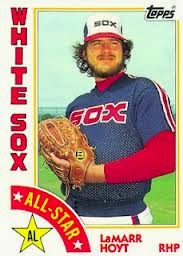
in the AL Cy Young voting to LaMarr Hoyt.
Despite his efforts, the Royals finished 79-83, which was good enough
for second place, but still 20 games back of Hoyt’s White Sox.
Quisenberry saw much of the same success in 1984. At the end of June, he had 20 saves and a
2.09 ERA. In the second half of the
season, he earned 24 more saves and a 3.13 ERA.
The Royals rode him hard down the stretch. In September, he was 2-0 with eight saves and
two blown saves. In 12 games that month,
he pitched 24 1/3 innings. In five of
those games, he went at least two innings.
Overall that season, he went 6-3 with a 2.64 ERA and 44 saves, with 41
strikeouts and 12 walks (four intentional) in 129 1/3 innings across 72
games. He was an All Star for the third
and final time of his career, finished third in the AL MVP voting behind fellow
reliever Willie Hernandez and Kent Hrbek, and once again he finished second in
the AL Cy Young voting, that award also going to Hernandez.
1985 would be the last year where Quisenberry would be a
dominant reliever. The first half of the
season was pretty pedestrian, at least by his standards. Through the end of June, he was 4-4 with a
2.67 ERA and 14 saves vs. five blown saves.
He gave up 65 hits and nine walks in 57 1/3 innings for a 1.291 WHIP,
but some of this may have been fueled by a .302 BAbip, which was far above his
.258 BAbip at that point in his career.
The second half of the season went a little better, as he went 4-5 with
a 2.13 ERA and 23 saves vs. seven blown saves.
He threw a total of 71 2/3 innings in 46 games in the second half. Overall, he went 8-9 with a 2.37 ERA and 37
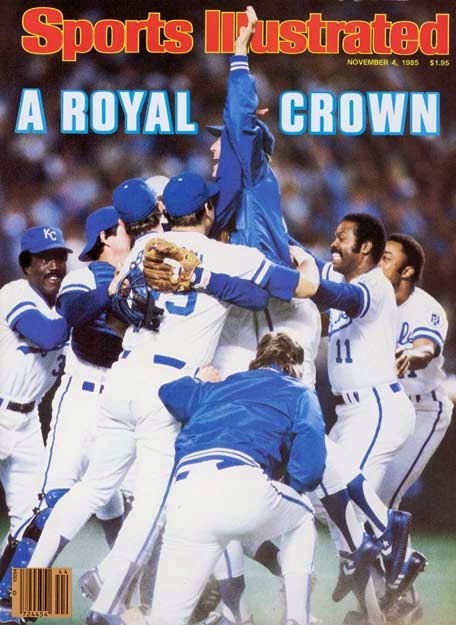
saves, with 54 strikeouts and 16 walks (eight intentional). The Royals would finish one game ahead of the
Angels, and after beating the Blue Jays in the ALCS, they defeated the St.
Louis Cardinals in seven games to become World Series champions. That post season, he went 1-1 with a 3.00 ERA
and one save.
Quisenberry then decided to fall off a cliff, as far as
production went. In 1986, he went 3-7
with a 2.77 ERA and only 12 saves. He
walked 24 batters (12 intentionally) and only struck out 36 in 81 1/3 innings
across 62 games. Despite only having 12
saves, he still led the team, as the Royals only had 31 total and finished
third in the AL West. In 1987, he would
only pitch in 49 innings across 47 games and earn eight saves. He went 4-1 with a 2.77 ERA and 17 strikeouts
vs. 10 walks (three intentional).
1988 would mark Quisenberry’s last season in Kansas
City. He earned his last save as a Royal
on April 28th, and pitched his last game as a Royal on June 24th. On July 4th, he was released by
the Royals. Ten days later, he took a
trip on I-70 east, and signed with the St. Louis Cardinals. For the Royals, Quisenberry had a 3.55 ERA
over 25 1/3 innings to start the season, and for the Cardinals in July, his ERA
was actually a bit lower at 3.24 in 8 1/3 innings. Then August happened. For that month, he had a 8.49 ERA in 11 2/3
innings, and in September it was 6.00 in 18 innings. He didn’t earn a single save in the second
half of the season with the Cardinals.
Overall for the year, he went 2-1 with a 5.12 ERA and one save, with 28
strikeouts and 11 walks (three intentional) in 63 1/3 innings across 53 games.
Quisenberry somewhat righted the ship for the 1989
season. He had a rough April where he
had a 5.62 ERA in eight innings, but by the time July 6th rolled
around, he had four saves and a 1.99 ERA.
Two days later, he gave up three runs in two innings, but he wouldn’t
give up multiple runs again until his last two outings of the season, giving up
two runs each in those. For the season,
he went 3-1 with six saves, with 37 strikeouts and 14 walks (nine intentional)
in 78 1/3 innings across 63 games.
The Cardinals released Quisenberry at the end of the 1989
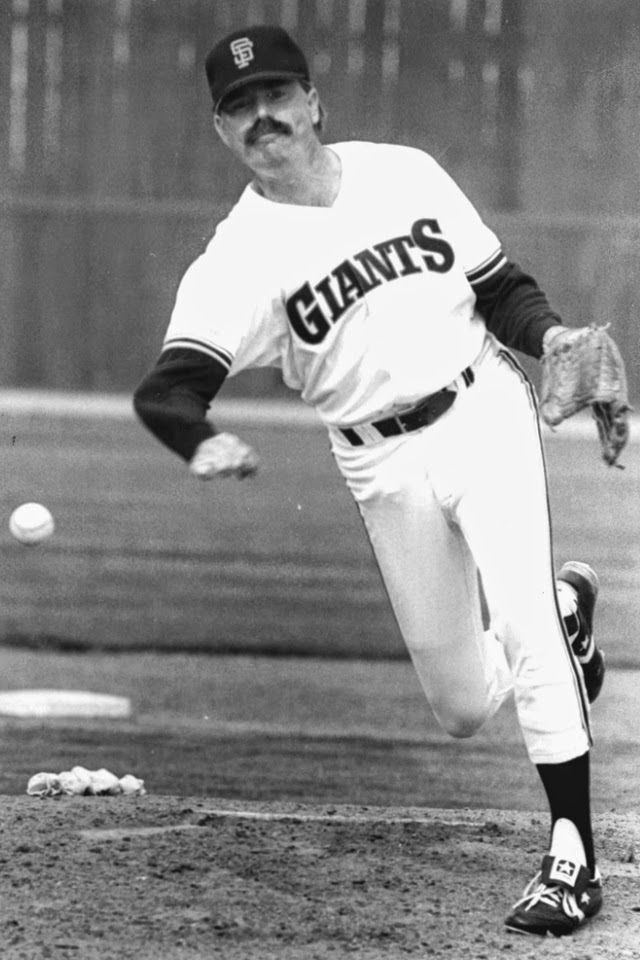
season. For 1990, he signed with the San Francisco Giants. This did not go well. He only pitched in five games for the Giants, all in April, before he tore his rotator cuff, which led him to retire. He gave runs in three of those games; 10 total across 6 2/3 innings. He would pitch his last game on April 23rd, giving up three runs in 2 1/3
innings in a 13-3 loss to the San Diego Padres.
Quisenberry did go out in style though.
That day, the last hit, walk, and run he ever gave up was to Joe Carter,
Jack Clark and Tony Gwynn respectively.
For his career, Quisenberry was 56-46 with a 2.76 ERA and
244 saves, with 379 strikeouts and 162 walks.
Of those walks, 70 were intentional.
Breaking that out, he unintentionally walked a batter every 11 1/3
innings. Quisenberry’s first balk in the
majors came on April 9th, 1988 – his 556th game in the
majors. He would end up with a total of
five. He faced a total of 4247 batters
in his career. He hit SEVEN of them. He threw four wild pitches in his career, or
one every 261 innings. As a comparison,
the best reliever of all time, Mariano Rivera, faced 5103 batters in his
career. He hit 13 of them, and threw 13
wild pitches – one every 98.7 innings.
Quisenberry had a career WHIP of 1.175, which seems a bit
high considering his lack of walks. He
was the epitome of “pitch to contact”, allowing 1064 hits in his 1043 1/3
innings. However, only 59 of those hits
left the yard, good for a 0.5 HR/9 inning ratio. Although his K/9 inning was comically low at
3.3, his low walk rate led to a 2.34 K/BB ratio. His career BB/9 ratio of 1.397 is the 20th
lowest of all time. Of the 19 pitchers
in front of him, only two pitched in the 20th century, the last one
throwing his final game in 1926.
Now that we’ve reviewed some of these numbers, I’ll let you
in on a little secret. If you know
anything at all about Quisenberry, you probably remember the almost-underhanded
delivery he had. You may assume that he
always did that, but you would be wrong.
He didn’t develop that style of pitching until spring training in
1980. His manager suggested the change
because he didn’t have a good fastball, and requested that Quisenberry learn
the style from Kent Tekulve. So not only
was Quisenberry a master control artist, he did it using a pitching style that
was totally foreign to him.
In 1996, in his first year on the Hall of Fame ballot, he
only received 3.8% of the votes and dropped off.
Dan Quisenberry, wherever you are, I’m not sure of your
feelings on the DONT WALK sign, but thank you for taking it to heart and
championing its cause.
Sunday, August 31, 2014
DO NOT BLAME DAVE STIEB
My daily baseball calendar gave me another fantastic piece
of information today. This time, it
revolves around Dave Stieb, the most Canadian person ever from Santa Ana,
California.
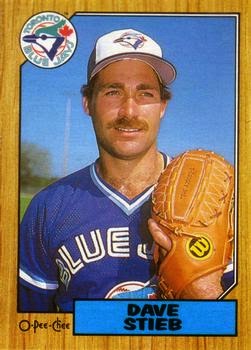
Stieb was drafted in the fifth round of the 1978 Major
League draft by the Toronto Blue Jays, out of Southern Illinois University
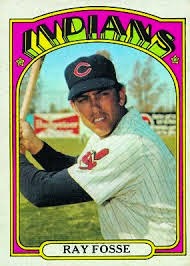
Carbondale. The Salukis have produced a
total of 29 players, including Stieb, Steve Finley, Jerry Hairston Jr., and Ray
Fosse.
In 19 minor league games at the end of the 1978 season and
first half of 1979, in 19 games, Stieb had two shutouts over seven complete
games, going 12-2 with a 2.95 ERA and 66 strikeouts vs. 43 walks. The Blue Jays decided he was ready for the
big show.
Stieb made his Major League debut on June 19th,
1979, in a 6-1 loss to the Baltimore Orioles.
He allowed all six runs (five earned) while giving up six hits and two
walks and striking out five. Things
weren’t going too bad until he gave up back to back home runs in the bottom of
the sixth to Doug DeCinces and Lee May.
He had a decent first year, going 8-8 with a 4.31 ERA and 52 strikeouts
vs. 48 walks. He had a total of seven
complete games out of 18 games started that year, with one shutout.
Stieb would make the AL All Star team the next two seasons,
when he combined to go 23-25 with a 3.48 ERA and 197 strikeouts vs. 144
walks. He started 57 of the 59 games in
which he pitched, throwing 25 complete games with six shutouts. He even finished 27th in the AL
MVP voting in 1981. He earned AL Pitcher
of the Month in April of 1980 when he went 3-0 with a 1.09 ERA and 15
strikeouts vs. 14 walks. That month, he
had three complete games and a shutout, only allowing four runs in 33 innings.
The next four seasons saw three All Star appearances, and
also three seasons where he received votes for the AL Cy Young award. Overall, he was 64-47 with a 2.91 ERA and 693
strikeouts vs. 352 walks. Of his 145
starts, he completed 52 of them, with 13 shutouts. He averaged 275 innings per season over those four seasons, totaling 1098 1/3
innings. In those innings, he gave up
915 hits, but with his walk rate under three per nine innings, his WHIP was
1.154. Stieb would again win AL Pitcher
of the Month in May of ’83 (5-1; 1.73 ERA, 43 strikeouts and 22 walks; three
complete games and two shutouts) and May of ’85 (4-1; 1.69 ERA, 34 strikeouts
and 16 walks, one complete game).
1986 and 1987 were somewhat down years for Stieb. For those two seasons, he was 20-21 with a
4.43 ERA and 242 strikeouts vs. 174 walks.
In 390 innings, he gave up 403 hits, and with his walks per nine innings
hitting exactly four, his WHIP shot up to 1.479. He only had four complete games with two
shutouts over those two seasons, also notching his first career save on July 23rd,
1986.
Then came 1988. There
was nothing particularly remarkable about Stieb’s numbers that season. Overall, he went 16-8 with a 3.04 ERA and 147
strikeouts vs. 79 walks. Pretty decent
numbers, and they even earned him an All Star bid. He had eight complete games and four
shutouts. Long gone were the days of
almost touching 300 innings; after throwing 265 in 1985, the highest total he
would have was 208 2/3 in 1990. He was
an inning and a third short of that in ’88.
The reason we’re talking about 1988 is because the Blue
Jays, for the most part, were not a good team in 1988. At the end of May, they were seven games
under .500. Entering August, they were
only three games under .500, but 11 ½ games back of the Boston Red Sox. They didn’t show much improvement that month;
August 31st, they sat at 65-68, still 10 ½ games out of first place.
| That's $29.84 American. |
That’s when I imagine that Stieb, in his Santa Ana, CA
accent (whatever that sounds like), called out his ragtag bunch of Canadians,
set a fire under their bellies and DID SOMETHING ABOUT IT. He said “WE CAN WIN THIS THING, HEY?” They then explained that it isn’t “hey”, it’s
“eh”. It sounds like “hey”, but without
the H at the beginning. He asked why
they never corrected him in his nine plus seasons there. They explained that he wasn’t ever a leader
really, but now that he was stepping up, they felt it necessary to say
something. He appreciated their honesty,
and wrote them all a check for $37C.
From September 1st on, the Blue Jays went 22-7,
finishing the season 87-75. They
narrowly missed the playoffs, finishing two games back of Boston, but it was a
team that Canada could be proud of (Les Expos finished 81-81, but 20 games back
of the New York Mets).
![]() |
| Wilkerson had a career .000 batting average on a 3-0 count, but an OBP of .966. |
One probably wondered whether Stieb was going to make it at
all that September, though. In his first
start on September 2nd against the Texas Rangers, he only lasted one
inning, giving up four runs – all earned – on a hit and a walk. Huh?
Well, the first inning started off just fine, with Stieb only allowing a
single and stolen base to Oddibe McDowell.
In the second inning, the wheels came off. He walked the first three batters on 16
pitches, and after throwing three balls to Curt Wilkerson, he was replaced in
mid-count by John Cerutti. Cerutti
promptly threw ball four to Wilkerson, allowing Geno Petralli to score. After allowing an RBI single to Jim Sundberg,
Cerutti retired McDowell and then allowed a three run triple to Scott
Fletcher. The Jays would come back to
tie the game with home runs from George Bell and Fred McGriff, along with an
RBI single by Tony Fernandez. The
Rangers would tie it at six all in the top of the ninth, when Sundberg would
hit a solo home run off of Tom Henke, but Bell hit a walkoff RBI single in the
bottom of the frame, scoring Fernandez and giving the Jays the 7-6 victory.
![]() |
| 54 career home runs in 17 seasons. |
Cerutti was unable to help out Stieb in his next
appearance. After Stieb threw seven
innings of three run ball (two earned) against the Detroit Tigers where he
struck out six and walked two, Cerutti gave up a two out double in the bottom
of the ninth to Chet Lemon. After
intentionally walking the VERY DANGEROUS pinch hitter Dave Bergman, Alan
Trammell pinched hit for Tom Brookens, and singled home Lemon. Through his first two September starts, Stieb
didn’t have a decision, and his ERA was 6.75.
Stieb’s next start was also against the Tigers, and this
time, he owned them. His only blemish on
the day came in the top of the third, when Jim Walewander hit a leadoff double,
and after a balk put him on third, Bergman knocked him in on a groundout to
Kelly Gruber. After allowing leadoff
singles to Luis Salazar and Fred Lynn to start the eighth, Tony Castillo came
in and promptly got Mike Heath to hit into a double play, followed by a
groundout by Ray Knight. The Blue Jays
won 9-1, with Jesse Barfield putting the nail in the coffin, hitting his third
and final career grand slam in the bottom of the seventh off of Paul
Gibson. Stieb went 7+ innings, only
allowing six hits and two walks while striking out four. The run that he allowed in the fourth inning
would be the last one he would allow over his next 35 innings pitched.
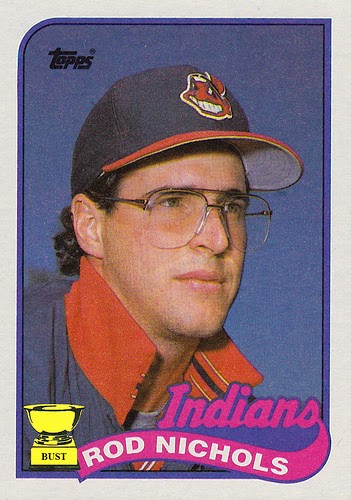
Stieb’s next start on September 18th was against
the Cleveland Indians. Through the first
three innings, it was a true battle between Stieb and the Tribe’s rookie Rod Nichols, as the only runner allowed was a Stieb walk to Cory Snyder, who was erased by a double play off of the bat of Dave Clark. In the top of the fourth, the Indians loaded the bases with no outs, but Stieb was able to work his way out of that. In a snapshot of how the game has changed in the last 26 years, even with loading the bases and then getting three outs, Stieb only threw a total of 17
pitches that inning. He only threw six
pitches in the eighth inning! On his way
to the complete game shutout, he scattered four hits and two walks while
striking out four. Nichols also pitched
a complete game, giving up four runs.
Combined, the pitchers threw 218 pitches, and the game took 2:10 to
complete.
Stieb would get the Indians again in his next start six days
later in Cleveland. Matched up against
Nichols again, this was an epic duel.
The Blue Jays nearly took the lead in the top of the second inning, when
they strung together three hits with two outs, but Barfield was thrown out at
home by left fielder Mel Hall. Entering
the ninth inning, Nichols had given up seven hits and three walks across 121
pitches. Stieb had given up ZERO hits and two walks across 106
pitches.
In the top of the ninth, McGriff would lead off the inning
with a single. Rance Mulliniks would
bunt him to second, and after a Rick Leach single got him to third, Rob Ducey
took seven pitches to knock him in on a sacrifice fly to center field. Manuel Lee would strike out to end the inning
with the Blue Jays leading 1-0.
![]() |
| Franco played one week in 2014 for the Ft. Worth Cats. |
In the bottom of the frame, no hitter in tact, Stieb struck
out Andy Allanson to lead off the inning.
Willie Upshaw then pinch hit for Paul Zuvella, grounding out to second
base. Julio Franco was the Tribe’s last
hope. Franco watched the first pitch for
a ball, and watched the next two pitches, both called strikes. After fouling off the next three pitches,
then taking another ball, he singled on a ground ball to center field, breaking
up the no hitter with two outs in the ninth.
Clark then flew out to center field, ending the game. Stieb threw a total of 127 pitches, allowing
just the one hit and two walks with eight strikeouts. Nichols was the hard-luck loser that day,
allowing nine hits and three walks with three strikeouts across 137 pitches. This game took slightly longer, going 2:31 in
front of a crowd of 8157 in Cleveland Stadium.
Stieb’s final start of the 1988 season came on September 30th
in Toronto, in the Blue Jays’ 160 game of the season. They entered the day 4 ½ games back after
beating the Red Sox 1-0 the day before on a masterful performance by Jimmy Key,
where he only allowed two singles and one walk, needing only 99 pitches in the
complete game shutout.
The Blue Jays got an early lead after Tony Fernandez tripled
on the first pitch he saw that day from the Orioles’ Jeff Ballard. The next batter was Kelly Gruber, who singled
Fernandez home. On the pitching side of
things, Stieb was perfect through the first three innings, only needing 31
pitches to get through the O’s lineup the first time around. In the top of the fourth, Stieb would hit Joe
Orsulak with his second pitch of the inning, but he was erased one pitch later
when Pete Stanicek grounded into a double play.
Through five innings, Stieb had still not allowed a hit, and
the only runner he had allowed was Orsulak after 48 pitches. In the bottom of the fifth, the Blue Jays put
together a two out rally, with singles by Nelson Liriano and Ducey, preceded an
RBI single by Fernandez and a two run triple by Gruber. No damage was done by the Orioles in the
sixth. Stanicek’s one out walk in the
seventh was erased by a Cal Ripken Jr. lineout double play a batter later. After seven innings, Stieb had still only
faced the minimum number of hitters and had not allowed a hit, and he was at 80
pitches.
The eighth inning was more of the same from Stieb, only
needing eight pitches to dispatch Eddie Murray, Terry Kennedy and Larry
Sheets. The Blue Jays went down quietly
in the bottom half of the inning, setting up Stieb’s second chance at history
in a week’s time.
Blue Jays’ fans hardly had time to get out of their seats in
the top of the ninth, with Brady Andersongrounding out to first after two
pitches, and pinch hitter Jeff Stone grounding out to Stieb on the first pitch
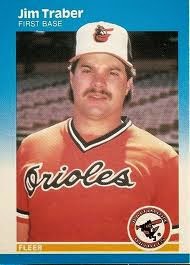
he saw. With two outs, Jim Traber, pinch
hitting for Craig Worthington, was the only man standing between Stieb and the
history books. On a 2-2 count, Traber
connected for career hit 137, a bloop single just inside the right field line,
ending Stieb’s bid for the no hitter.
Two pitches later, Orsulak grounded out to third base, completing his
third shutout in a row. Stieb only
needed 90 pitches that day. On the other
side, Ballard had a complete game as well, only needing 99 pitches. Other than the first and fifth innings, he
only allowed one other hit that day. The
game only took 1:52 to complete.
Stieb had quite a finish to the 1988 season. Along with the two one hitters in his last
two starts, he also had one on May 31st, but this one was not quite
as dramatic, as the only hit of the day was a one out single by B.J. Surhoff in
a 9-0 victory over the Brewers.
After a pretty good 1989 season, Stieb would eventually get
his no hitter, throwing it in the Year of the No Hitter, 1990. On September 2nd, he would no-hit
the Indians in Cleveland. 1990 was the last
year Stieb would be an effective pitcher, when he went 18-6 with a 2.93 ERA and
125 strikeouts vs. 64 walks. He was an
All Star, and finished 5th in the AL Cy Young Award voting, and 25th
in the AL MVP voting.
In Stieb’s last two years in Toronto, he would only pitch in
30 games, going 8-9 with a 4.33 ERA and 74 strikeouts vs. 66 walks. After the 1992 season, he signed with the
Chicago White Sox, but after going 1-3 with a 6.04 ERA and 27 strikeouts vs. 17
walks, he was released on May 23rd, 1993. He signed with the Kansas City Royals on June
14th, but he was released six weeks later after going 3-3 with a
6.42 ERA and 18 strikeouts vs. 12 walks at AAA Omaha (but he did have a
complete game shutout there).
For some reason, Stieb decided to play, and the Blue Jays
decided to sign him, in 1998, after being out of baseball for four years. Starting the season 20 years removed from his
first stint at Dunedin, and later returning to Syracuse after a 19 year
absence, he combined to go 7-4 with a 2.78 ERA and 66 strikeouts vs. 22 walks
in 81 innings across 12 games, all starts.
He even threw two complete games!
The 1998 Blue Jays were good on the offensive side of the
ball. Carlos Delgado, Shawn Green and
Jose Canseco all hit 35+ home runs.
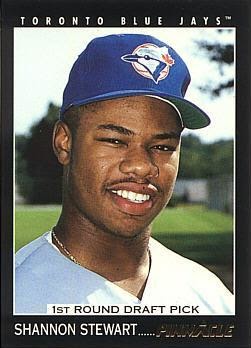
Green contributed 35 stolen bases, and Shannon Stewart added 51
more. Then we look at the pitching. Roger Clemens went 20-6 on his way to the Cy
Young Award. All other pitchers combined
to go 68-68. The other starters were
mainly pre-Dave Duncan Chris Carter and Woody Williams, and decline phase Pat
Hentgen and Juan Guzman (Guzman’s peak lasted three years; his decline phase
lasted seven).![]() |
| Stieb had aged quite a bit by the time '98 rolled around. |
When Stieb made his season debut on June 18th,
the Blue Jays were 34-37. I guess at
that point, they really had nothing to lose by calling him up, since they were
already 17 ½ games back. Entering the
game with a 13-6 lead over the Orioles, he danced around three hits without
giving up a run. Almost a month later,
on July 15th, he would get his first start of the season, a 5-2 loss
to the White Sox, giving up four runs in six innings. He would get his second career save on August
19th, in a 16-2 win over the Seattle Mariners. Ten days later, he would get his final career
victory in his second start of the season, a 14-7 victory over the Minnesota
Twins, then six days later, he would get his third and final career save in a
12-1 win over the Red Sox. Finally, in
his last start of the season, he couldn’t summon the magic of 10 years earlier,
losing to the Indians 7-5. Overall that season,
he went 1-2 with a 4.83 ERA and two saves, with 27 strikeouts vs. 17 walks.
For his career, Stieb went 176-137 with a 3.44 ERA and three
saves, with 1669 strikeouts vs. 1034 walks.
His 140 wins in the 1980’s trailed only Jack Morris’ 162 during that
decade. Nearly always leading or among
the leaders in hit batsmen, his career total of 129 ranks 37th of
all time. The BBWAA concluded he was not
a Hall of Famer, with him only garnering 1.4% of the vote in his first and only
appearance in 2004. Still, his 57.0
career WAR ranks him 69th all time for a pitcher. Always a good defender, he only made 22
errors in 787 chances, good for a career fielding percentage of .972. He didn’t have enough games pitched to qualify,
but if he had, that would rank him tied for 67th best fielding
percentage for a pitcher all time.
Fun fact – Stieb never had a hit in his two career at bats,
but he did score two runs. In 1981 and
1986, he scored a run as a pinch runner.
His first career at bat came on August 28th, 1980 as a pinch
hitter/LEFT FIELDER in a 15 inning, 7-5 loss to the California Angels, where he
flew out to center field in the bottom of the 15th inning. His final career at bat came nearly 18 years
later, grounding out to Tom Glavine in a 10-3 loss to the Atlanta Braves on
June 28th, 1998.
Even though Stieb was never officially on a World Series
winner (he last pitched on August 8th, 1992), they did award him a
ring after the 1992 season. He has the
only no hitter in Blue Jays history. He
still is the all time leader for the Blue Jays in wins, ERA, games started,
complete games, shutouts, innings pitched and strikeouts. And probably one hitters lost with two outs
in the ninth inning.
Tuesday, August 19, 2014
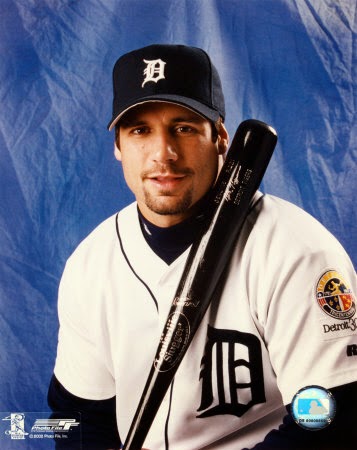
Tiger Tuesday – Bobby Higginson
Don’t worry people, this won’t be our weekly feature! But since I haven’t had the time to really
think about what to do on an ongoing basis, the first thing to pop into my head
today was Tiger Tuesday. Ok, so maybe
I’m going crazy. After settling on that
idea, the first Tiger that came into my head was Al Kaline. But he’s already been mentioned in one of my
blogs. Plus, that’s a little earlier
than where this blog is supposed to focus.
The second Tiger to pop into my head was Bobby Higginson. With this, I accomplished two things: I nailed the epitome of who/what this blog is
supposed to focus on, and I also confirmed that I was in fact going crazy. The Detroit Tigers have played baseball for
120 years, and the second Tiger player to pop into my head is Bobby Higginson. But what’s done is done, so let’s take a look
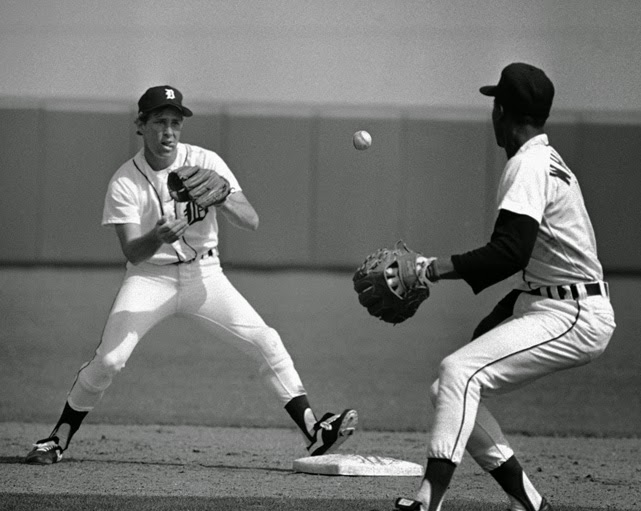
at Robert Leigh Higginson.![]() |
| Mike Cameron trucks some fool. |
Higginson was originally drafted in the 18th
round of the 1991 Major League Draft by his hometown Philadelphia Phillies, out
of Temple University. The Owls have
produced 15 total major leaguers, but only six since 1960, and Higginson is by
far the best. Although only three other
players from the 18th round in 1991 made the majors, those four
players combined for 94.3 WAR. Along
with Higginson, there was Ron Mahay, Kirk Rueter and Mike Cameron. Higginson declined to sign with the Phillies
and instead returned to Temple. The
following year, he was taken in the 12th round by the Tigers. Five other players from that round made the
majors, but other than Higginson, the only other one of note was Doug
Mientkiewicz.
![]() |
| The contact will take care of itself. Or not. |
Upon signing with the Tigers, Higginson was assigned to A-
Niagara Falls. There, he had a pretty
decent season, hitting .293 with 17 doubles, four triples, two home runs, 37
RBIs and 12 stolen bases, with 33 walks and 47 strikeouts. He only made two errors in 67 games in the
outfield, good for a .983 fielding percentage, and had five outfield
assists. His on base percentage was
.383, a good deal higher than team home run leader Keith Kimsey, who hit 12
home runs, walked nine times, and struck out 106 times. You have to admire someone that committed to
sticking with their process.
In 1993, Higginson would start the season at A+
Lakeland. In 61 games, he hit .300 with
11 doubles, seven triples, three home runs, 25 RBIs and eight stolen bases,
with 40 walks and 31 strikeouts. He made
two errors in the outfield, good for a fielding percentage of .979, and he
added seven outfield assists. All of
this earned him a promotion to AA London, where he hit .308 with 15 doubles,
four triples, four home runs, 35 RBIs and three stolen bases, with 19 walks and
37 strikeouts. He only made two errors
there as well, good for a fielding percentage of .982, and he added 11 outfield
assists.
Higginson would spend his entire 1994 season at AAA
Toledo. For the Mudhens, he hit .275
with 28 doubles, three triples, 23 home runs, 67 RBIs and 16 stolen bases, with
46 walks and 99 strikeouts. With the
increase in strikeouts came the increase in power. In the outfield, he committed eight errors
for a .973 fielding percentage, and he added 10 outfield assists.
The Tigers deemed Higginson ready for the big leagues for
the 1995 season. He would make his Major
League debut on April 26th, pinch hitting for Danny Bautista in a
5-4 win over the California Angels. He
would strike out against Bob Patterson in his first at bat in the sixth, and
then pop out to short in the eighth, three batters after Cecil Fielder hit
career home run number 220, a two run shot that proved to be the game
winner. Higginson wouldn’t get his first
hit until four days later, an RBI single in a 10-1 victory over the Seattle
Mariners. On May 2nd and 3rd,
he hit his first two career home runs.
On August 20th, he had his first career two-home run
game. Overall for the 1995 season, he
hit .224 with 17 doubles, five triples, 14 home runs, 43 RBIs and six stolen
bases, with 62 walks and 107 strikeouts.
In the outfield, he only made four errors for a .983 fielding
percentage, and he added 13 outfield assists.
It’s too bad that Higginson exhausted his Rookie of the Year
eligibility in 1995, because he very well could have won the award in 1996. In the third game of the season, he went 4-6 with a three run home run off of the Oakland Athletics former can’t-miss prospect Todd Van Poppel. In a 10-9 Tigers victory, he added three runs, including what proved to be the game winner, scoring on Melvin Nieves’ sacrifice fly in the top of the 15th
inning. That was also the first of three
straight games in which he hit a home run.
He would add another four hit day on April 24th, a game which
the Tigers lost 24-11 to the
Minnesota
Higginson was hitting .303 on April 25th, but in
the 12 games after that, his average dropped all the way to .252. He was placed on the DL, and wouldn’t return
until June 7th. He came back
with a seven game hit streak, and only went hitless in three of 21 games in
June, where he hit .394 with seven home runs.
Two of those home runs came on June 20th, and three days
later, he started another streak of three consecutive games where he hit a home
run. In July, he hit three home runs in
his first five games, and in the last four games that month, he hit a
ridiculous .688 (11 for 16).
Higginson had a decent August that season, and then in
September, he only went hitless in five of 23 games, hitting .352 to end the
season. His average hit a season high
two days before the end of the season, which is something many people can’t
say. Overall for 1995, he hit .320 (.342
after the DL stint) with 35 doubles, 26 home runs, 81 RBIs and six stolen
bases, with 65 walks and 66 strikeouts.
His rediscovered patience at the plate helped him set a career highs in
on base percentage (.404) and OPS (.982).
He committed nine errors in the outfield for a .963. I assumed that at least some of those errors
had to do with a less-than-optimum Higginson earlier in the season, and my
suspicions were correct. In 29 games
played before the injury, he had five errors.
In 94 games after he came back, he had four errors. Overall for the season, he also added nine
outfield assists.
![]() |
| Halladay reacts to Higginson's hit just before he realized how it was going to go. |
Higginson’s numbers remained pretty consistent for the next
two seasons, as he hit a combined .291 with 67 doubles, nine triples, 52 home
runs, 186 RBIs and 15 stolen bases, with 133 walks and 186 strikeouts. In the outfield, he only had 18 errors for a
.977 fielding percentage, and he added 38 outfield assists. Highlights include his first four career
grand slams and his first three-home run game where he added seven RBIs in a
14-0 beat down of the New York Mets on 6/30/97.
He would add a home run the following day, tying a major league record
with home runs in four consecutive at bats.
On 9/27/98, he hit a pinch hit home run with two outs in the ninth inning
in a 2-1 loss to the Toronto Blue Jays.
The significance? Up to that
point, the Tigers did not have a hit in what was Roy Halladay’s second career
appearance.
Higginson was never quite right in 1999, only playing in 13
games after July 23rd. For the
season, he only hit .239 with 18 doubles, 12 home runs, 46 RBIs and four stolen
bases, with 64 walks and 66 strikeouts.
He only made three errors in the outfield for a .983 fielding
percentage, but he only added two outfield assists. He would bounce back strong the following
season, hitting .300 with 44 doubles, four triples, 30 home runs, 102 RBIs and
15 stolen bases, with 74 walks and 99 strikeouts. He made seven errors in the outfield for a
.979 fielding percentage, and he added 19 outfield assists. He was AL Player of the Week for the weeks of
June 18th (.545 with five home runs and 12 RBIs) and October 1st
(.500 with three home runs and 10 RBIs).
Over the next two years, Higginson continued to be a fairly
consistent player. He hit a combined .279
with 52 doubles, nine triples, 27 home runs, 134 RBIs and 32 stolen bases, with
121 walks and 110 strikeouts. In the
outfield, he committed 15 errors for a .973 fielding percentage, adding 25
outfield assists. He was again AL Player
of the week for July 15th, 2001 (.500 with two home runs and seven
RBIs; short All Star week).
The next two seasons were the decline phase for
Higginson. In the 2003 and 2004 seasons,
he combined to hit .240 with 37 doubles, six triples, 26 home runs, 116 RBIs
and 13 stolen bases, with 129 walks and 157 strikeouts. He was still solid in the outfield,
committing 11 errors for a .978 fielding percentage, and he added 17 outfield
assists. He would earn his final AL
Player of the Week award for the week of August 22nd, 2004 (.556
with four home runs and 12 RBIs, including two-two home run games).
2005 was the end of the road for Higginson. He only played in 10 games, with his last
coming on May 5th. His last
career hit came on April 7th, an RBI single off of Shawn Camp in a 7-3
victory over the Kansas City Royals. He
still managed to play seven errorless games that season, and even earned his
last outfield assist on April 20th, nailing Jermaine Dye at second
base in a 9-1 loss to the Chicago White Sox.
To me, it seemed like Higginson was on the Tigers forever,
but it was actually only 11 seasons, if you include his very brief 2005. For his career, he hit .272 with 270 doubles,
33 triples, 187 home runs, 709 RBIs and 91 stolen bases, with 649 walks and 796
strikeouts. His overall fielding
percentage was .977, with 64 errors in 1274 games in the outfield, adding 124
assists. That outfield assist total is
actually good for 205th all time, one behind Jose Cruz, Bug
Holliday, Willard Marshall and Bobby Murcer, and one ahead of Rocky Colavito,
Torii Hunter, Mark Kotsay and Duke Snider.
While he never led the league in any offensive category, he did lead the
AL in outfield assists in 1995, 1997, 2000, and 2004, and finished second in
1998 and 2002.
While he certainly isn’t a Hall of Fame caliber player, and
voters agreed, not casting a single vote for him in 2011, he is the type of
player built for a team Hall of Fame. It
appears the Tigers are pretty stingy with that though, as they only have
elected 22 members for a team that has played for 120 years. Maybe one day, they’ll open the doors for
Higginson. And Alan Trammell. And Lou Whitaker.
Subscribe to:
Comments (Atom)