Tuesday, July 15, 2014

1994 Rookie of the Year Countdown – Manny Ramirez

Continuing our Tuesday look at the countdown to the Rookies of the Year in 1994, today we examine
former Indians/Red Sox/Dodgers/White Sox(?) and Rays (?) outfielder Manny Ramirez.

Ramirez was drafted in the first round – 13th overall – of the 1991 Major League draft by the Cleveland Indians out of George Washington High School in New York, NY.  The Trojans have produced a total of 10 major leaguers, including Hall of Famer Rod Carew, Ramirez, and eight others with little significance in baseball history.

Upon signing with the Indians, the 19-year old Ramirez was assigned to rookie ball Burlington.  There, in 59 games, he hit .326 with 11 doubles, four triples, 19 home runs and 63 RBIs, with 34 walks and 41 strikeouts.  He led the team in almost every offensive category, including 146 total bases, which was 79 more than second place Pat Maxwell, who’s claim to fame is he was teammates with Manny Ramirez at rookie ball Burlington in 1991.

Ramirez’ excellent debut earned him a promotion to A+ ball Kinston for 1992.  There, at two years younger than league average, in 81 games, he hit .278 with 18 doubles, four triples, 13 home runs and 63 RBIs, with 45 walks and 74 strikeouts.  Despite his numbers taking a slight dip, he moved up to the 13th ranked prospect in all of baseball, up from 37th the previous season.

In 1993, Ramirez kept moving up the chain, this time being promoted to AA Canton-Akron.  There, in 89 games, his numbers jumped back up, hitting .340 with 32 doubles, 17 home runs and 79 RBIs, with 45 walks and 68 strikeouts.  These numbers earned him another promotion to AAA Charlotte.  There, at five years younger than league average, in 40 games he hit .317 with 12 doubles, 14 home runs and 36 RBIs, with 27 walks and 35 strikeouts.

His minor league numbers in 1993 earned Ramirez a late season callup to the Indians.  He would make his major league debut on September 2nd, in a 4-3 win over the Minnesota Twins.  As a DH, he went 0-4 in that game, as Wayne Kirby, Carlos Baerga and Jim Thome did the damage for the Indians, and Jerry Dipoto survived a ninth inning leadoff walk to Chuck Knoblauch and RBI double by Dave Winfield to pick up the save.

The world wouldn’t have to wait long to see Ramirez’ potential, as the next day, he went 3-4 with a double and two home runs in a 7-3 victory over the New York Yankees.  

Unfortunately, in 45 more at bats that month, he only had six hits and two RBIs.  He finished his first partial season hitting .170 with a double, two home runs and five RBIs.

Despite his struggles at the end of the ’93 season, Ramirez opened the 1994 campaign in Cleveland.  On Opening Day, he went 1-3 with a game tying two-run double off of Randy Johnson in the bottom of the eighth, a game that Cleveland would eventually win 4-3 in 11 innings over the Seattle Mariners.  In the fifth game of the season, he was 3-3 with two home runs and five RBIs.  The Indians defeated the California Angels that day 9-6, but the Angels scored five runs in the bottom of the ninth before Bo Jackson struck out with two on to end the game.  Ramirez came flying out of the gate, hitting .313 with five doubles, six home runs and 21 RBIs, with nine walks and 15 strikeouts.

In May, Ramirez came back to earth.  In 21 games, he only had a hit in seven of them, hitting .132 with three doubles, two home runs and seven RBIs, with six walks and 16 strikeouts.  He was still hitting .280 on May 14th, but finished the rest of the month 3-39, which equaled a .077 batting average.

Ramirez righted the ship in June.  In 23 games, he only failed to get a hit in seven of them.  For the month, he hit .319 with seven doubles, five home runs and 15 RBIs, with 18 walks and 18 strikeouts.  For the week of June 12th, he hit .579 with two home runs and six RBIs, earning him AL Player of the Week honors.

Ramirez’ average continued to climb steadily in July.  For the month, he hit an even .300 with three doubles, one home run and nine RBIs, with six walks and 15 strikeouts.  He had four straight multi-hit games between July 26th – July 30th, but despite the power outage (his slugging percentage dropped 20 points on the season that month), he continued to hit.

Ramirez continued to show that May was a fluke month as he entered the last days of the season.  In 10 games in August, he hit .306 with four doubles, three home runs and eight RBIs, with four walks and eight strikeouts.

On his way to the second place finish in the AL Rookie of the Year voting, overall, Ramirez hit .269 with 22 doubles, 17 home runs and 60 RBIs, with 42 walks and 72 strikeouts.  In 84 games in right field, he only made one error in 160 chances, good for a fielding percentage of .994, one tick behind AL leaders Paul O’Neill and Darrin Jackson.  He also added eight outfield assists, good for fourth in the AL behind Kirby Puckett, Jay Buhner and Tim Salmon.

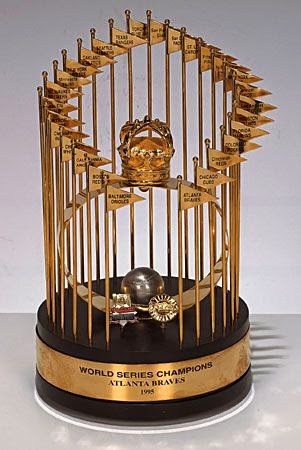
How did this team NOT win
a World Series?!
In 1995, Ramirez would become a star.  He hit 11 home runs in the month of May alone, and he finished the month hitting .394, earning AL Player of the Month honors.  On August 4th, he hit his first career grand slam off of Jason Bere in a 13-3 win over the Chicago White Sox.  Though he only hit .247 with one home run over the final month of the season, he still finished the year hitting .308 with 26 doubles, a triple, 31 home runs and 107 RBIs, with 75 walks and 112 strikeouts.  He made the All Star team, finished 12th in the AL MVP race and won a Silver Slugger award.  The Indians made their first of five straight post season appearances, making it all the way to the World Series.  Ramirez only hit .189 for the post season, and the Indians fell to the Braves in six games.

Ramirez put up decent number the next two seasons in Cleveland, but he was not deemed worthy of an All Star selection.  For the ’96 and ’97 seasons, he combined to hit .319 with 85 doubles, three triples, 59 home runs and 200 RBIs, with 164 walks and 219 strikeouts.  The Indians made it all the way to the World Series in 1997, but lost in seven games to the Florida Marlins.

Double X.
Ramirez’ final three years in Cleveland were the first three seasons of 11 consecutive All Star appearances.  For the ’98 - ’00 seasons, he hit a combined .324 with 103 doubles, seven triples, 127 home runs and 432 RBIs, with 258 walks and 369 strikeouts.  In 1998, he finished sixth in the AL MVP voting.  In 1999, he led the league in RBIs (165), slugging percentage (.663) and OPS (1.105), finished third in the AL MVP voting, and won a Silver Slugger award, and the AL Hank Aaron Award.  He was the AL Player of the Month in May ’99, when he hit .337 with seven home runs and 30 RBIs.  His 165 RBIs in 1999 tied for the 14th most in major league history, and were the most since Jimmie Foxx had 175 in 1938.  In 2000, he finished sixth in the AL MVP voting, and won another Silver Slugger award.  The Indians couldn’t advance any further than the ALDS in 1998 (losing to the Yankees in six games), and ALCS in 1999 (losing to the Boston Red Sox in five games).  They missed the playoffs altogether in 2000.
Nice.

In 2001, Ramirez took his talents east to Boston, signing an eight year, $160 million contract.  He quickly paid dividends to the Red Sox, earning AL Player of the Month honors for April ’01, when he hit .408 with nine home runs and 31 RBIs.  He would earn the honor again in September ’02, when he hit .396 with nine home runs and 30 RBIs.  Overall, in his first four years in Boston, he made the All Star team each year, and also won a Silver Slugger award.  Combined, he hit .321 with 144 doubles, three triples, 154 home runs and 466 RBIs, with 333 walks and 450 strikeouts.  He led the AL in batting average in 2002 at .349, and led the AL in home runs (43), slugging percent (.613) and OPS (1.009) in 2004.  He again won the AL Hank Aaron Award in 2004, along with the 2004 World Series MVP award, as the Red Sox swept the St. Louis Cardinals.  He finished in the top 10 in AL MVP voting all four seasons.

In his final three full seasons in Boston, Ramirez hit .302 with 90 doubles, three triples, 100 home runs and 334 RBIs, with 251 walks and 313 strikeouts.  He was again a World Series champion in 2007, as the Red Sox swept the Colorado Rockies.  He made the All Star team each year, and won Silver Slugger awards in 2005 and 2006, finishing fourth in the AL MVP voting in 2005, and 18th in 2006.


In 2008, at age 36, Ramirez was in the midst of his final season in Boston.  Through the first 100 games of the season, he was hitting .299 with 22 doubles, a triple, 20 home runs and 68 RBIs, with 52 walks and 86 strikeouts.  At the trade deadline on July 31st, he was sent to the Los Angeles Dodgers, who sent Andy LaRoche and Bryan Morris to the Pittsburgh Pirates, who in turn sent Jason Bay to the Red Sox, who in turn sent Craig Hansen and Brandon Moss to the Pirates.  Got it?  Ramirez feasted on NL pitching for the rest of the season, hitting .396 with 14 doubles, 17 home runs and 53 RBIs, with 35 walks and 38 strikeouts, earning NL Player of the Month honors for August.  The Dodgers would advance to the NLCS, where they would lose to the Philadelphia Phillies in five games, but in eight post season games, Ramirez hit .520 with four home runs and 10 RBIs, with 11 walks vs. four strikeouts.


Ramirez would turn those magical two months in Los Angeles to a new two year, $45 million contract with the Dodgers.  Suspended for 50 games in 2009 for testing positive for a banned substance, he still had decent numbers, although not to the levels he had previously posted.  He hit .290 with 24 doubles, two triples, 19 home runs and 63 RBIs, with 71 walks and 81 strikeouts.  In 27 games before the suspension, he hit .348 with six home runs and 20 RBIs.  In the 77 games after the suspension, he hit .269 with 13 home runs and 43 RBIs.

In 2010, Ramirez wouldn’t even last the entire final season in Los Angeles.  Through the end of August, he was hitting .311 with 15 doubles, eight home runs and 40 RBIs, with 32 walks and 38 strikeouts.  He only appeared in 66 games with the Dodgers due to three stints on the DL.  On August 30th, he was claimed off of waivers by the Chicago White Sox.  Over the final month of the season in Chicago, he hit .261 with one double, one home run and two RBIs, with 14 walks and 23 strikeouts.  His lone home run on September 17th came off of Max Scherzer, and proved to be the final of his career.

Damon and Ramirez, still
waiting for Damon's throw
to reach the infield.
In 2011, Ramirez signed a one year, $2 million contract with the Tampa Bay Rays.  Through five games, he was only 1-17 (.059) and abruptly retired after being informed that he again tested positive for a banned substance in spring training.  Rather than face a 100 game suspension, he called it quits.

The following season, he unretired, signing a contract with the Oakland A’s.  His 100 game suspension was reduced to 50 games, and after the first 50 games of the season, he reported to AAA Sacremento, where in 17 games, he hit .302 with three doubles and 14 RBIs.  Still, with no home runs in the minor leagues after 63 at bats, the A’s decided to move on, releasing him on June 15th.

THAT’S WHEN THINGS GOT WEIRD.  Just kidding, they were already weird.  But in between the 2012 and 2013 seasons, Ramirez played in the Dominican League, then he signed with a team in Taiwan for 2013.  In 49 games with the EDA Rhinos (no I do not know what EDA stands for), he hit .352 with eight home runs and 43 RBIs.  The logical thing to do at that point was to quit and return to the US.  On July 3rd, he signed with the Texas Rangers, who assigned him to AAA Round Rock.  In 30 games, he hit .259 with three doubles, three home runs and 13 RBIs, with 10 walks and 14 strikeouts.  He was released on August 13th.

Not knowing when to quit, Ramirez found a perfect match for the 2014 season, reuniting with Theo Epstein to be a player-coach for the Chicago Cubs AAA team in Iowa.  So far this year, he is hitting .222 with a home run and four RBIs.

Hello?  Give me
the president!
Assuming Ramirez doesn’t get back to the majors, he finishes his career hitting .312 with 547 doubles, 20 triples, 555 home runs and 1831 RBIs, with 1329 walks and 1813 strikeouts.  He has a career .411 on base percentage, and his career slugging percentage of .585 and OPS of .996 both rank ninth all time.  He only made 75 errors in 1939 games in the outfield, good for a .978 fielding percentage.  His home run count ranks 14th all time, and his RBI count ranks 18th all time.  His 216 intentional walks and HR/AB rate of 14.9 both rank 11th all time.

Will Ramirez make the Hall of Fame?  His numbers certainly support election. 
I might be in the minority here, but
I really liked Albert Belle.
That being said, he was caught cheating at least twice (rumor was he also tested positive in 2003).  He was/is also crazy as hell.  He was routinely benched for his bizarre behavior.  Who is he without the juice?  Reggie Sanders?  Maybe without the stolen bases.  1996 teammate Kevin Mitchell?  Probably a little better than him.  1997-1999 fellow teammate David Justice?  That’s probably the best comp that I could find.  Either that or fellow malcontent/teammate Albert Belle.  Pretty good, but not hall-worthy.

The countdown to the Rookie of the Year continues next week with the anti-Manny Ramirez…John Hudek.  Who-dek?

Tuesday, July 8, 2014

1994 Rookie of the Year Countdown – Ryan Klesko

Continuing our Tuesday look at the countdown to the Rookies of the Year in 1994, today we examine former Braves and Padres first baseman/outfielder Ryan Klesko.

Klesko was drafted in the fifth round of the 1989 Major League draft by the Atlanta Braves out of Westminster High School in Westminster, CA.  He is the only Lion to ever make it to the majors.  A handful of fellow fifth rounders made the majors, including J.T. Snow, Alan Embree and Dave Staton.

Upon signing with the Braves, they assigned Klesko to rookie ball GCL Braves.  In just 17 games, he hit .404 with five doubles, four triples, a home run, 16 RBIs and four stolen bases, with six walks and six strikeouts.  That earned him a promotion to A ball Sumter, where he would finish out the season.  In 25 games, he hit .289 with six doubles, a home run, 12 RBIs and a stolen base, with 11 walks and 14 strikeouts.

In 1990, Klesko would return to Sumter to open the season.  Still over two years younger than the average player for the league, he hit .368 with 15 doubles, a triple, 10 home runs, 38 RBIs and 13 stolen bases, with 31 walks and 30 strikeouts.  As the year before, OPSing over 1.000 will earn you a promotion, so he was called up to A+ Durham.  As he finished out the season, he hit .274 with 16 doubles, a triple, seven home runs, 47 RBIs and 10 stolen bases, with 32 walks and 53 strikeouts.

For the 1991 season, Klesko would be promoted to AA Greenville ranked the number three prospect in all of baseball.  There, he would hit .291 with 22 doubles, three triples, 14 home runs, 67 RBIs, and 14 stolen bases (with 17 caught stealing), with 75 walks and 60 strikeouts.

1992 saw another promotion for Klesko, still ranked the eighth best prospect in baseball, as he started the season at AAA Richmond.  A full five years younger than league average, his numbers took a dip.  On the season, he hit .251 with 22 doubles, two triples, 17 home runs, 59 RBIs and three stolen bases, with 41 walks and 72 strikeouts.  Even though his numbers didn’t stack up to where they had been in the past, the Braves wanted to see what he could do in the big show.  He was called up on September 12th.  In his first game, he struck out as a pinch hitter against Doug Jones in the eighth inning of a 9-3 win over the Houston Astros.  Other than his first career RBI on October 1st, which was an RBI groundout, there was nothing to highlight in his first 13 games in the majors.  He would go 0-14 with an RBI and five strikeouts.

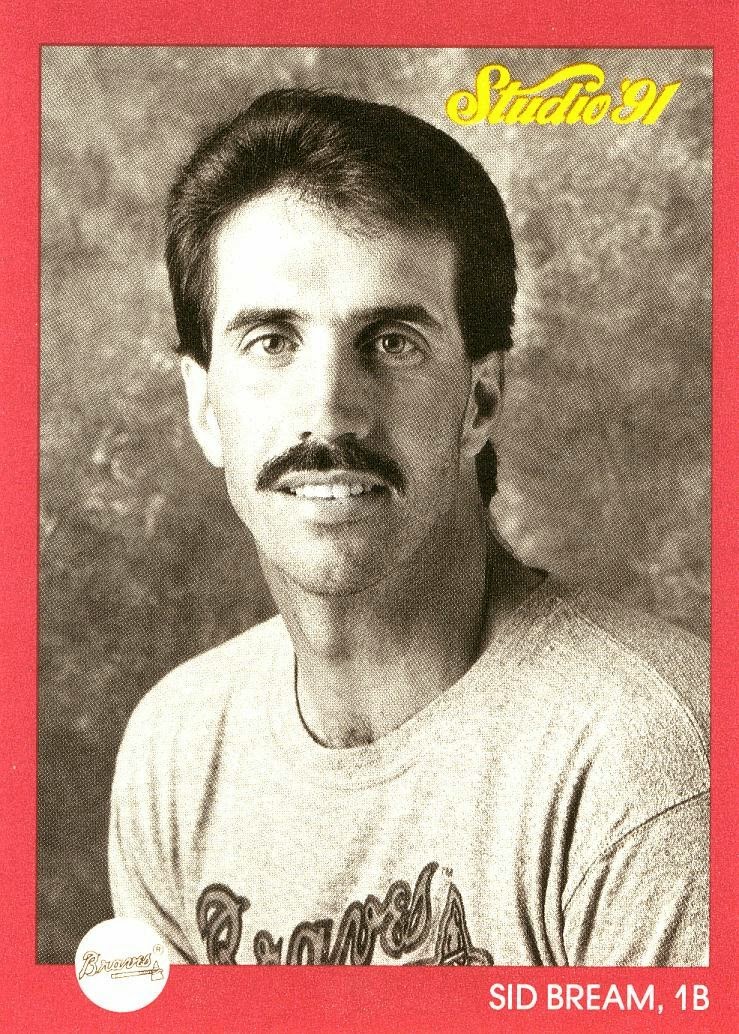
After the poor showing at the end of the previous season in the majors, Klesko returned to Richmond for 1993.  With a little more experience under his belt, his numbers improved.  He hit .274 with 14 doubles, two triples, 22 home runs, 74 RBIs and four stolen bases, with 47 walks and 69 strikeouts.  Up until this season, he had always been a first baseman in the minors.  While he still played there the majority of the season, he did play 18 games in the outfield, committing three errors in 24 chances for a .875 fielding percentage.  But along with those three errors came three assists.  Why would the Braves convert their stud first base prospect to the outfield?  In 1992, the Braves primarily relied on Sid Bream at first base.  He hit .261 with 10 home runs.  They also had Bream at first to start 1993, where he hit .260 with nine home runs.  But the Braves didn’t shift Klesko to the outfield because of Bream’s consistency, they did it because on July 18th, THE CRIME DOG showed up in Atlanta.  The Braves quickly went into “Plan B” mode, gave Klesko 18 games in the outfield, and said “good enough!”.

Actually, now that I dug into it a little further, Klesko actually started the 1993 season in Atlanta.  He was there all the way through May 15th, when he was sent back down.  At that point, he was hitting .273 with a home run, an RBI, two walks and three strikeouts.  In those 14 games, he only had 13 plate appearances.  His first career hit was off of Bryan Harvey as a pinch hitter in a 4-3 loss to the Florida Marlins on April 22nd.  His first career home run was off Tim Wakefield, as he tied the game at two leading off the bottom of the ninth, but the Pittsburgh Pirates scored four unearned runs in the top of the 11th to win 6-2 on April 27th.

Rookie, yes.
Prospect, no.
When Klesko returned to Atlanta on September 11th, he would hit .500 with a double, a home run, four RBIs, a walk and a strikeout in his final eight games.  His second career home run on September 15th would also be memorable, as he cut the lead to 6-4 with a pinch hit, two run shot off of Johnny Ruffin, knocking him out of the game.  After Jeff Reardon allowed a double by Otis Nixon and single by Jeff Blauser, Rob Dibble came in and promptly served up a game winning three run home run to Ron Gant, as the Braves won 7-6 against the Cincinnati Reds.  Between the parts of two seasons, Klesko hit .353 with a double, two home runs and five RBIs, with three walks and four strikeouts.

Klesko returned to the Braves for good for the 1994 season.  He opened the month of April on an absolute tear, going 9-16 in his first four games, good for a .563 average.  He also hit a home run in each of his first two games.  Overall for the month, he hit .345 with two doubles, a triple, six home runs and 15 RBIs, with eight walks and 13 strikeouts.  Highlights of the month include a 4-4 effort on April 6th, and a 3-4 effort with a double, home run, and four runs scored in a 19-5 win over the Cubs on April 15th.

Klesko would cool off a bit in May.  He only had three multi-hit games on his way to hitting .227 with four doubles, a triple, a home run and three RBIs, with three walks and 15 strikeouts.  The only real highlight that month was his lone home run, a solo shot in a 11-4 loss to the New York Mets on May 14th.

June would be a much better month for Klesko.  He started out with a five game hit streak to open the month.  He would only go hitless in five games in the month, and only three of those games were starts.  For the month, he hit .421 with five doubles, a triple, eight home runs and 17 RBIs, with four walks and five strikeouts.  There were several high points for the month, including four home runs in the final four games of the month, including his first two home run game in a 9-8 loss to the Philadelphia Phillies on June 26th.

As good as June was, July was plain awful for Klesko.  Overall, he hit .132 with two doubles, two home runs, 11 RBIs and his first career stolen base, with six walks and 11 strikeouts.  He only had two hits in his last 26 at bats for the month after July 20th.  Though his season average was still .306 at that point in time, the slump took it all the way down to .281.

As the season drew to a close, things didn’t get much better for Klesko.  In the final eight games, he hit .214 with one RBI, five walks and four strikeouts.

On his way to the third place finish in the 1994 NL Rookie of the Year voting, Klesko hit .278 with 13 doubles, three triples, 17 home runs, 47 RBIs and a stolen base, with 26 walks and 48 strikeouts.  In his new home in left field, he committed six errors (the most in the NL) in 74 games, which equaled a .921 fielding percentage.

Klesko emerges from the bottom
of the pile, finally able to breathe again.
Klesko would take another step forward in 1995.  He wasn’t quite right to start the season, only hitting .091 on five games into the season on May 2nd.  When he came back from the DL on May 18th, he steadily improved his numbers.  This included a 4-5 effort with two home runs, including his first career grand slam, with six RBIs in a 17-3 win over the Chicago Cubs on June 6th.  In 22 games in June, he only went hitless in six games, and had multiple hits in 10 of them, hitting .435 for the month with seven home runs and 22 RBIs.  His average would get as high as .359 on July 21st, before hitting .266 the rest of the way.  For the season, he set career highs in average (.310), slugging (.608) and OPS (1.004).  To go along with those stats, he added 25 doubles, two triples, 23 home runs, 70 RBIs and five stolen bases, with 47 walks and 72 strikeouts.  On defense, he again led the league in errors in left field, this time with seven, equaling a fielding percentage of .942.  He would get his first taste of post season play, along with his only World Series ring that fall.  He went 7-15 (.467) against the Rockies, 0-7 against the Reds, and 5-16 (.313) with three home runs in the World Series against the Indians.


In 1996, Klesko solidified himself as an offensive force in a dangerous Braves lineup that featured five players with 20 or more home runs – Klesko, McGriff, Javy Lopez, Chipper Jones, and Marquis Grissom.  Klesko would be named NL Player of the Week for the first week of the season, when he hit .526 with three home runs and six RBIs.  He hit two home runs on July 14th and August 28th, and he hit grand slams on May 27th and July 27th.  Overall, he hit .282 with 21 doubles, four triples, a career high 34 home runs, 93 RBIs and six stolen bases, with 68 walks and 129 strikeouts.  His defense continued to improve, this time only committing five errors in 144 games, good for a .975 fielding percentage.  The Braves would again make it to the World Series, but for the postseason, Klesko would only hit .176.

Klesko would spend three more seasons in Atlanta, where he hit a combined .277 with 80 doubles, nine triples, 63 home runs, 234 RBIs and 14 stolen bases, with 157 walks and 265 strikeouts.  He would again lead the league in errors in left field with six in 1997, but in 1998, he only committed one, and added nine assists, on his way to a .994 fielding percentage.  The Braves made the playoffs each year, with another World Series appearance in 1999.  This would be where Klesko would have his last at bat as a Brave, a popout to second base in the top of the ninth off of Mariano Rivera.  One batter later, Keith Lockhart would fly out to left field, and the Yankees would win their third World Series in four years.  On December 22nd, the Braves traded Klesko, Bret Boone and Jason Shiell to the San Diego Padres for Wally Joyner, Reggie Sanders and Quilvio Veras.

Y2KLESKO!!!
I’m pretty sure if I was in marketing for the Padres, I would have termed the year 2000 as Y2KLESKO.  Y2K wasn’t anything extreme, and neither was Klesko, so it would have made sense.  Overall, he hit .283 with 33 doubles, two triples, 26 home runs, 92 RBIs and 23 stolen bases (he only had 26 in the previous eight seasons).  For the first time in his career, he had more walks than strikeouts – 91 vs. 81.  He was NL Player of the Week for the week of July 23rd, when he hit .419 with two home runs and 11 RBIs.  Playing almost exclusively at first base, he only made nine errors all season, good for a .992 fielding percentage.  The Padres did not make the playoffs, finishing 76-86, the only team with a losing record in a very good NL West.

While Klesko had many solid seasons in his career, one could argue that 2001 was his best.  It was the only season where he made the All Star team.  For the season, he hit .286 with 34 doubles, six triples, 30 home runs, a career high 113 RBIs and 23 stolen bases, with 88 walks and 89 strikeouts.  For the third and last time in his career, he was named NL player of the week, this time for the week of September 2nd when he hit .517 with five home runs and 11 RBIs.  Spending all of his time at first base, he made 11 errors, which was still good for a .991 fielding percentage.

Over the next five years, all with the Padres, Klesko hit a combined .275 with 109 doubles, four triples, 77 home runs, 288 RBIs and 14 stolen bases, with 291 walks and 316 strikeouts.  He had shoulder surgery before the 2006 season, which caused him to miss all but six games that season, his last in San Diego.
Granted free agency after the 2006 season, he signed with the San Francisco Giants for 2007.  For the season, he hit .260 with 27 doubles, three triples, six home runs, 44 RBIs and five stolen bases, with 46 walks and 68 strikeouts.  He only committed three errors in 100 games at first base, equaling a .996 fielding percentage.  His last career home run occurred on August 13th, a grand slam off of Shane Youman in a 10-3 win over the Pirates.  His last game was on September 27th, when he went 0-3 with three strikeouts in a 6-4 loss to the Padres.

For his career, Klesko hit .279 with 343 doubles, 33 triples, 278 home runs, 987 RBIs and 91 stolen bases, with 817 walks and 1077 RBIs.  He added a .236 average and 10 home runs in the post season.  Splitting time between first base and the outfield, his career fielding percentage was .989.  Although he never really led the league in anything, he’s still listed on career leader lists, although very far down – 99th in career slugging at .500, 165th in career home runs, 167th in career intentional walks with 84, etc.

While Klesko certainly wasn’t a Hall of Fame player (and writers agreed as he failed to garner a single vote in his first time on the ballot in 2013), he was certainly an integral part of the powerhouse Braves in the 1990s.

We’re getting close to the top folks!  Next week, we look back at all around crazy dude Manny Ramirez.

Tuesday, July 1, 2014

1994 Rookie of the Year Countdown – Rusty Greer

Continuing our Tuesday look at the countdown to the Rookies of the Year in 1994, today we examine former Rangers outfielder, and one of my personal favorite players, Rusty Greer.

Thurman Clyde Greer was drafted in the 10th round of the 1990 Major League draft by the Texas Rangers out of the University of Montevallo, in Montevallo, AL.  He’s the only Falcon to ever make it to the majors, but they have had a total of 26 players drafted.  Only five players from the 10th round ever played in the majors, and Greer was by far the best.

Upon signing with the Rangers, Greer was assigned to Rookie ball Butte.  There, in 62 games, he did was he was born to do – hit the baseball.  He hit .345 with 12 doubles, six triples, 10 home runs, 50 RBIs and nine stolen bases, with 41 walks vs. 23 strikeouts.  His on base percentage was .444, and his OPS was 1.029.  All of these numbers are pretty good.  Unfortunately, in 60 games in the outfield, he made eight errors, which equaled a .918 fielding percentage.  Fortunately, it would never be that low again for the rest of his career.

1991 found Greer promoted to A+ Port Charlotte.  While his numbers weren’t as glitzy there, he still held his own.  He hit .294 with 15 doubles, a triple, five home runs, 48 RBIs and 12 stolen bases, with 66 walks vs. 48 strikeouts.  His OBP dipped just below 40%, coming in at .395.  On defense, he made two fewer errors in 36 more games in the outfield, and added just one in eight games at first base.  This was good for a fielding percentage of .970 overall.  This earned him a late season callup to AA Tulsa, where in 20 games, he hit .297 with three doubles, two triples, three home runs, 12 RBIs and two stolen bases, with 17 walks vs. just six strikeouts.  His OBP jumped to .451.  He also didn’t commit an error in those 20 games in the outfield.

Other than the eight games the prior year, Greer had little experience at first base, but in 1992, again in Tulsa, that was where he mainly played.  His numbers did take a dip while he adjusted to the new position, but that is somewhat understandable.  The good news is that it was his worst professional season, numbers-wise anyway.  He hit .267 with 22 doubles, four triples, five home runs, 37 RBIs and two stolen bases, with 60 walks and 63 strikeouts.  Still, with the lower average, he had a .376 on base percentage.  He adjusted pretty well to the new position, only committing 11 errors in 98 games at first base, good for a .987 fielding percentage, and was again error-free in six games in the outfield.

Greer again found himself in Tulsa to start the 1993 season.  With a mostly full season of first base under his belt, his numbers rebounded.  For the season, he hit .291 with 25 doubles, six triples, 15 home runs, 59 RBIs and 10 stolen bases, with 53 walks and 79 strikeouts.  While his on base percentage fell to .365, his slugging percentage jumped to .464, both numbers higher than any season since his days in Butte.  Playing all 129 games at first base, he only made eight errors, good for a .993 fielding percentage.  He earned a late season callup to AAA Oklahoma City…where he didn’t do very well.  In only eight games, he hit .222 with two doubles, a home run and four RBIs, with six walks and seven strikeouts.  Back in the outfield, he once again played eight error-free games.

Greer would open the 1994 season again at AAA Oklahoma City, but he wouldn’t be there long.  In 31 games, he was back to his old self, hitting .315 with 12 doubles, a triple, three home runs, 13 RBIs and a stolen base, with 18 walks and 24 strikeouts.  Back in the outfield, in 29 games he made two errors, and he added one in his only game at first base, which equaled a combined .948 fielding percentage.  The Rangers deemed him ready, and called him up in mid-May.

On May 16th, 1994, Greer would make his Major League debut in a 10-inning,
11-7 win over the Oakland Athletics.  In the first inning, the Rangers teed off against former Cy Young Award winner Bob Welch to the tune of six runs in 2/3 of an inning.  This featured a two run triple by Will Clark, a two run double by Ivan Rodriguez, and a two run single by Manny Lee.  Greer, batting second, flew out to right against Welch, but leading off the second, he hit a home run for his first major league hit off of Carlos Reyes.  He would line out in the fourth, single in the seventh, and fly out in the ninth, before finishing the day in grand fashion by hitting a two run single in the top of the tenth in between RBI singles from David Hulse and Jose Canseco.

Greer certainly did make a splash in his first half-month in the majors.  At the end of May, through 15 games, he was hitting .382 with five doubles, a triple, a home run and 12 RBIs.  The plate discipline that he showed throughout the minors dropped off a bit, with only four walks vs. 10 strikeouts, but you couldn’t argue with the results.  His on base percentage sat at .424 at the end of the month.  He was only hitless in three games, and had seven multi-hit games.  He switched back and forth between left field and right field, and played first base in one game, entering in the fourth inning of a 19-2 loss to the Mariners on May 20th (they would also lose to the Mariners the next day 13-2).  In those two losses, Greer did his part, going 3-6 and knocking in two of the four runs.

As the league developed a book on him, Greer didn’t fare quite as well in his first full month in June.  He only hit .263 with five doubles, four home runs and 13 RBIs.  Good hitters make adjustments though, and while his average did fall, he increased his walk/strikeout ratio to exactly one, with 15 walks vs. 15 strikeouts.  In fact, there was one five game span where he had seven walks vs. just one strikeout. This helped maintain his .372 on base percentage that month.  He had arguably his best game of the season on June 4th, when he went 4-6 with two doubles and a home run in a 10-4 win over the Boston Red Sox.  Along with five games at first base, he would play all three outfield positions in June.

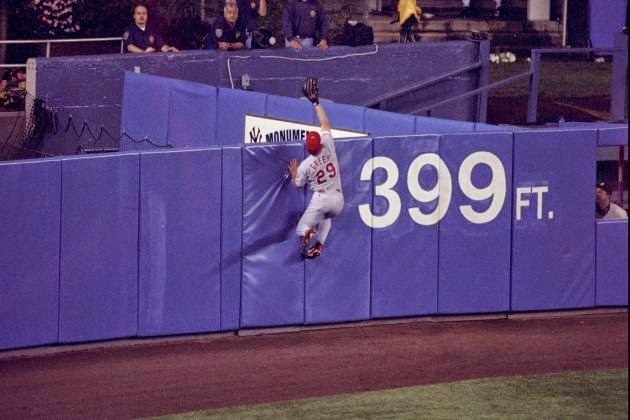
Greer would continue to adjust in July, once again getting his average on the right side of .300.  For the month, he hit .327 with four doubles, four home runs and 17 RBIs, to go along with 20 walks vs. just 15 strikeouts.  His on base percentage for the month was .433.  In a double header sweep against the Detroit Tigers on July 1st, he was a combined 4-8 with a home run and four RBIs.  He had his first multi-home run game on July 21st, with two solo shots against Pat Hentgen in a 9-3 loss to the Blue Jays.  He played three games at first base, with the rest across all three outfield positions.  Perhaps the greatest moment of that July came on the 28th, when he made a spectacular diving catch to keep Kenny Rogers’ perfect game in tact.


As the season wound down, Greer kept it steady.  Over his last nine games in August, he hit .310 with two doubles, one home run and four RBIs, with seven walks and six strikeouts.  He was only hitless in two of those games.  He played mostly center field, but also had a couple games in right field.  In his last game that season, he had your typical Greer game, with a ground out, single, walk, and intentional walk.

Overall, on his way to the third place finish in the 1994 AL Rookie of the Year voting, Greer hit .314 with 16 doubles, one triple, 10 home runs and 46 RBIs, with 46 walks and 46 strikeouts.  His on base percentage was .410.  In 73 games in the outfield, he only made four errors, and he added two more in nine games at first base.  This was good for a combined .973 fielding percentage.  Only three players between both leagues received first place votes for Rookie of the Year that season – the two winners, and Greer.

1995 was Greer’s worst full season of his major league career.  He started the season with a five game hit streak, but by mid-May, his average had dipped all the way to .197.  A month later, he had it all the way up to .310.  At the end of July, it was back down to .243.  Finally, by the time the season ended, he had it up to .271.  To go along with that average, he had 21 doubles, two triples, 13 home runs, 61 RBIs and his first three stolen bases, to go along with 55 walks and 66 strikeouts.  His .780 OPS was exactly league average.  Across 125 games at all three outfield positions, he only made four errors, but he added two more in just three games at first base.  This added up to a .976 fielding percentage.  His seven assists from left field were good for fifth in the league, behind 11 that leaders Marty Cordova and Mike Greenwell had.  He hit his first grand slam of his career on May 18th as a pinch hitter in the eighth inning in a 6-2 victory over the Milwaukee Brewers.

In 1996, Greer would help lead the Rangers to their first ever playoff appearance.  For the season, he hit a career high .332, good for fifth highest in the AL, with 41 doubles, six triples, 18 home runs, 100 RBIs and nine stolen bases, with 62 walks and 86 strikeouts.  His on base percentage jumped back up to .397.  He added two more grand slams during the season.  Playing all of his games in the outfield, he only made five errors, good for a .984 fielding percentage, which was second best among AL left fielders.

The Rangers didn’t make the playoffs in 1997, but Greer had arguably the best season of his career.  He hit .321 with 42 doubles, three triples, 26 home runs, 87 RBIs and nine stolen bases, with 83 walks and 87 strikeouts.  His on base percentage went north of 40% at .405, helping him set a career high in OPS at .936.  He also set a career high with 112 runs scored.  He played all of his games in the outfield again, and his 12 errors in 154 games equaled a .965 fielding percentage.  He was AL player of the week for the week of June 15th, when he batted .600 with four doubles, three home runs, five RBIs, two stolen bases, five walks and two strikeouts.  I’m not sure who had a better week than he did the week of August 24th though.  He hit .444 with two doubles, four home runs, 14 RBIs, four walks and six strikeouts.  This included back to back games with two home runs and six RBIs against the Chicago White Sox on August 22nd and 23rd.  He finished 22nd in the AL MVP voting, far down the list from unanimous winner Ken Griffey Jr.

The Rangers would return to the playoffs in 1998, and Greer kept producing.  His average dipped a bit, as he hit .306 with 31 doubles, five triples, 16 home runs, 108 RBIs and two stolen bases, with 80 walks and 93 strikeouts.  His on base percentage dipped back to .386.  Defensively, he had his finest season, where in 154 games in the outfield, he only made three errors, good for a league leading .990 fielding percentage in left field.

In 1999, the Rangers would return to the playoffs for the third time in four years.  This would be the last season where Greer would hit .300.  His average sat at .326 at the end of April, but it fell all the way to .268 by mid-July.  From there on out, he hit .343, to finish the season right at .300.  To go along with that average, he had 41 doubles, three triples, 20 home runs, 101 RBIs and two stolen bases, with an excellent 96 walks vs. 67 strikeouts.  His on base percentage went back up to .405.  In 145 games in the outfield, he made five errors, good for a .983 fielding percentage.

In 2000, at the age of 31, Greer would have his last season playing in more than 100 games.  He hit .297 with 34 doubles, three triples, eight home runs, 65 RBIs and four stolen bases, with 51 walks and 61 strikeouts.  He only had three errors in 97 games in the outfield, for a .985 fielding percentage.  He missed most of April and May on the disabled list, and as of June 16th, his average sat at an even .200.  Then, he went on a streak of nine multi-hit games, had one game where he went 0-5, then had another four multi-hit games.  Over that 14 game streak, he hit .411, raising his average to .294.

Greer would only play in parts of two more seasons.  Across the 2001 and 2002 seasons, he hit a combined .284 with 32 doubles, two triples, eight home runs, 46 RBIs and two stolen bases, with 46 walks vs. 49 strikeouts.  In 86 games in the outfield, he had a .955 fielding percentage.

The reason why Greer is one of my all time favorites is because of his style of play.  It basically disabled him, and was the reason why his career was so short.  I remember countless plays where he was diving or crashing into walls.  After he played the last game of his career on July 11th, 2002, he had a surgery to fuse two vertebrae in his neck.  During the offseason that year, he had rotator cuff surgery.  Expected to miss the entire 2003 season, he then underwent Tommy John surgery.  During the next offseason, he had additional surgeries to remove scar tissue from his shoulder and elbow.  He attempted a comeback in 2004, but then had to have another surgery, this time to remove scar tissue from his forearm.  The Rangers then bought out the final year of his contract and released him.  He was invited to Spring Training in 2005 as a non-roster invitee for the Rangers and Minnesota Twins, but instead, he retired on February 20th, officially ending his career.

Overall in his career, he hit .305 with 258 doubles, 25 triples, 119 home runs, 614 RBIs and 31 stolen bases, with 519 walks and 555 strikeouts.  Across 970 career games in the outfield, he had a .979 fielding percentage.  On August 11th, 2007, he was elected to the Texas Rangers Hall of Fame.

Greer may have taken a back seat to the larger stars of the Rangers, including Juan Gonzalez, Ivan Rodriguez, Rafael Palmeiro, Will Clark, and later, Alex Rodriguez, but for those who appreciate hard-nosed, all-out play, I’m sure there are a few videos out there in internet land of some of Greer’s best plays.  I think I know what I’m doing the rest of the evening!

Tuesday, June 24, 2014

1994 Rookie of the Year Countdown – Steve Trachsel

Continuing our Tuesday look at the countdown to the Rookies of the Year in 1994, today we examine former mainly Cubs and Mets pitcher Steve Trachsel.

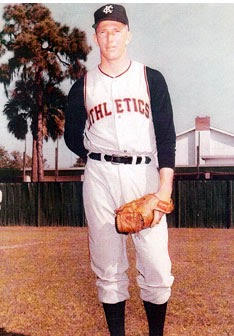
Trachsel was drafted in the eighth round of the 1991 Major League draft by the Chicago Cubs out of Cal State Long Beach.  For a list of good players that played for the 49ers, you just have to go back to the last post on Chris Gomez.  Let’s have some fun with this one though.  Perhaps the worst stats for a player out of CSLB that made the majors was Kansas City Athletics’ pitcher Tom Harrison.  He made his major league debut on May 7th, 1965 as a pinch runner in a 5-4 loss to the California Angels.  Ten days later, he pitched one inning, gave up a run, two hits and a walk in a 13-2 loss to the Chicago White Sox.  Back to Trachsel!

Upon signing, Trachsel was assigned to A- Geneva, where in two games, he was 1-0 with a 1.26 ERA and seven strikeouts vs. six walks.  He was then promoted to A+ Winston-Salem, where in 12 games, he went 4-4 with a 3.67 ERA and 69 strikeouts vs. 19 walks.  In his combined two stops, he allowed three home runs, one hit batter, one wild pitch, and FOUR balks.  That seems somewhat excessive in 14 games.

In 1992, Trachsel would spend the entire season at AA Charlotte.  There, he would go 13-8 with a 3.06 ERA, with five complete games and two shutouts, along with 135 strikeouts vs. 35 walks.  His 13 wins and 135 strikeouts led the team, along with his 29 starts, 191 innings pitched, and 19 home runs allowed.  He cut his balks down to just one!  This was tied for second on the team with several others.  The team leader was closer Jessie Hollins, who would have three, to go along with his 14 wild pitches in 70 1/3 innings pitched.

Trachsel would start the 1993 season at AAA Iowa.  He put up similar numbers there, going 13-6 with a 3.96 ERA, with one complete game and one shutout, along with 135 strikeouts and 45 walks.  To compensate for the 10 extra walks, he allowed 10 fewer hits.  If it wasn’t for two more hit batters, he would have allowed the exact same number of base runners (albeit in 20 fewer innings).  These numbers were apparently good enough for a call up.

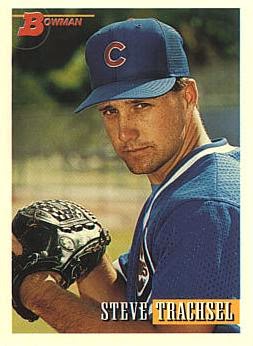
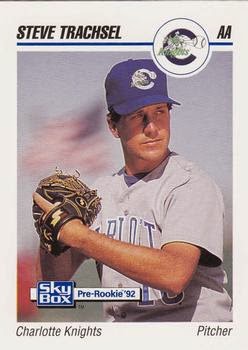
I can't get enough of this card.  WHAT
THE HELL IS HE DOING?
 People will
study this years from now, trying to understand.
On September 19th, 1993, Trachsel would make his major league debut vs. the Florida Marlins.  He would pitch well that day, only allowing a solo home run to Jeff Conine in the top of the first, and Alex Arias would score after a single, groundout, wild pitch, and sacrifice bunt in the top of the fifth.  The Cubs rallied for one in the eighth.  In the bottom of the ninth, the Cubs must have been fed up with their starters, as they had THREE pinch hitters bat.  Karl “Tuffy” Rhodes struck out looking for Steve Buechele, Rick Wilkins struck out swinging for Matt Walbeck, and Dwight Smith struck out looking for Eric Yelding.  That sewed up career save 171 for Bryan Harvey in a Marlins 2-1 victory.

Trachsel would make two more starts, each getting progressively worse.  On September 26th, he allowed three runs in a 5-1 loss to the Pittsburgh Pirates, and on October 1st, he allowed five runs in an 8-5 loss to the San Diego Padres.  Overall, in three games, he finished 0-2 with a 4.58 ERA, with 14 walks vs. three strikeouts.

1994 would find Trachsel back in the majors to start the season.  He was brilliant in his first start on April 8th, throwing 7 1/3 shutout innings with one walk and eight strikeouts in a 4-0 win over the Montreal Expos.  He had some ups and downs that April, as in five starts, he finished the month 2-2 with a 4.19 ERA, allowing eight home runs while striking out 33 and walking 12.

In May, Trachsel would get six starts for the Cubs.  In his first two, he would go seven innings and allow two runs in each on his way to victories in both games.  In his next start though, he would only last three innings, giving up 10 hits and four runs in a 6-4 loss to the Marlins.  Overall for the month, he was 2-1 with a 4.81 ERA, allowing four home runs while striking out 23 and walking nine.

June was a much better month for Trachsel in just about every category, except wins and losses.  In five starts, he didn’t give up more than three runs in any of them.  Overall for the month, he was 2-2 with a 2.41 ERA, allowing five home runs while striking out 25 and walking 14.

Trachsel would apparently go on the disabled list towards the end of July, as he only had four starts, and his last was on July 19th, his first after the All Star break.  In those four starts, he didn’t allow more than two runs in any of them.  He would go 3-1 with a 2.08 ERA, allowing only one home run while striking out 20 and walking 11.  A quick trip to AAA Iowa for a rehab appearance saw him go 0-2 with a 10.00 ERA.

As the season wound down, Trachsel would return to the Cubs, where he would go 0-1 with a 1.29 ERA, only allowing two runs over 14 innings in two starts.  He only allowed one home run while striking out seven and walking eight.

For the 1994 season, Trachsel would go 9-7 with a 3.21 ERA, allowing 19 home runs while striking out 108 and walking 54 on his way to the fourth place finish in the NL Rookie of the Year voting.  His candidacy was buoyed by the second half of that season.  Over the final two and a half months, he was only 5-4, but his ERA was 2.08.  He only allowed 18 runs in his final 78 innings.

The rest of Trachsel’s career was a roller coaster that no one wanted to ride.  His record in 1995 was 7-13, and his ERA jumped all the way to 5.15.  In 14 more innings, he gave up 40 more runs and 22 more walks.

In 1996, Trachsel was an All Star for the only time in his career.  Going 13-9, he had a career low ERA of 3.03, which was good for sixth in the NL.  It sat at 2.00 at the end of June, when he was 7-4.  Overall, he allowed 30 home runs while striking out 132 and walking 62.  He got his first career shutout on May 13th in a 6-0 victory over the Houston Astros.  He would follow that up with his second shutout on June 25th, a 2-0 win over the Los Angeles Dodgers.  He would throw one more complete game that season, again against the Astros on August 17th.  Although he allowed three runs, none of them were earned.

What better way to follow up an All Star campaign than by going 8-12 in 1997.  His ERA was 4.51, and he allowed a league leading 32 home runs.  His strikeouts jumped to a career high 160, while he walked 69.  In true Trachsel fashion, he’d follow up ’97 by going 15-8 in ’98.  His ERA only fell to 4.46.  He did give up five fewer home runs, sitting at 27 on the year, and he struck out 149 while walking 84.

Badass.
But the reason I remember Steve Trachsel so fondly is for what he did on September 8th, 1998.  He took a loss to my St. Louis Cardinals that day, when he allowed six earned runs in 5 2/3 innings.  He only gave up five hits, but three of them were home runs.  The first was record setting home run number 62 for Mark McGwire in the bottom of the fourth.  The last two were BACK TO BACK.  Ray Lankford and Ron Gant knocked Trachsel out of the game.  Lankford’s shot occurred right after an intentional walk to McGwire.

After going 8-18 in 1999, he was granted free agency by the Cubs.  For the 2000 season, he signed with the Tampa Bay Devil Rays.  Going 6-10, the Toronto Blue Jays decided they had to have him for the stretch run.  The Devil Rays traded him with Mark Guthrie to the Blue Jays for Brent Abernathy.  That ended terribly for both teams, but Trachsel went 2-5 for the Blue Jays.  They declined to offer him further employment.

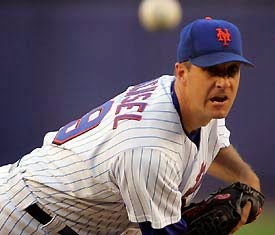
The New York Mets were the next suitors for Trachsel.  His first two years in New York saw him go a combined 22-24 with a 3.91 ERA, allowing 44 home runs while striking out 249 and walking 116.  He would follow that up with a 16-10 record in 2003 with a 3.78 ERA.  He was NL player of the week for the week of August 24th, when over two starts, he had a one-hit shutout paired with another 7 1/3 innings of shutout ball.  He also didn’t walk a batter and struck out seven.

Wow, there really was a
player named Rocky Cherry.
2004 would see Trachsel’s string of ten seasons with at least 29 starts.  He went 12-13 that season with a 4.00 ERA.  2005 was an injury shortened year, as he only went 1-4.  He would finish his New York career by going 15-8 in 2006, with a 4.97 ERA.

Trachsel’s excellent record in ’06 earned him a spot in the Baltimore Orioles’ rotation in ’07.  After only going 6-8 with a 4.48 ERA, he was traded back to the Chicago Cubs at the trade deadline for Rocky Cherry and Scott Moore.  He would finish the rest of the season with a 1-3 record and an 8.31 ERA while being booed out of Chicago.

He would resign with Baltimore for the 2008 season.  After going 2-5 with an 8.39 ERA, he was released by the Orioles on June 13th, and that was the end of his career.

Over his 16 year career, Trachsel was a perfectly good innings eater.  Across 420 games and 2501 innings pitched, he was 143-159 with a 4.39 ERA, giving up 348 home runs and striking out 1591 and walking 943.  He also allowed 2587 hits, which with the walks equated to a career WHIP of 1.411.

I love the internet.  It says his 2587 hits rank 212th of all time.  Hmm, I wonder who gave up more?  Well, Cy Young is the leader with 7092 across 22 seasons.  What about this cat at number 93 all time, Al Spalding?  He only pitched eight seasons, and gave up 3280 hits.  That’s impressive.  Turns out that Spalding is a Hall of Famer.  SWEET MERCY HE THREW 617 1/3 INNINGS IN 1874 AS A 23 YEAR OLD FOR THE BOSTON RED STOCKINGS.  He went 52-16 that season in 71 games, 69 of which were starts and 65 of them were complete games.  Of those career hits totals, 755 of them occurred that year.  He would follow up that campaign in 1875 by going 54-5.  Those 54 wins led the league.  So did his NINE SAVES.  His .795 winning percentage as a pitcher is a major league record.


Time has largely forgotten Steve Trachsel, but I’ll always remember September 8th, 1998.
DON'T WATCH THE BALL!!!  DIDN'T LITTLE LEAGUE TEACH YOU ANYTHING?!?!?!