Friday, April 25, 2014

Don Mattingly's Hurt - Bring in the next Babe Ruth

I never was much of a Yankees fan growing up, but I was a Don Mattingly fan.  I was from Indiana, and he was from Indiana (southern Indiana no less), so you really didn’t need much more of a connection.

Mattingly was drafted in the 19th round (493rd overall) of the 1979 draft by the Yankees.  Other 19th round draftees had baseball names like Teixeira (not Mark), Howe (not Arte), Rice (not Jim), Orosco (not Jesse), Dunn (not Adam), Rodriguez (not Alex/Ivan), etc.  But none of these baseball names ever made the majors.  He was actually drafted two spots ahead of Tom Henke, who was the first pick of the 20th round by the Seattle Mariners.

In 1984, in his first full season in the majors, Mattingly led the American League with a .343 batting average, 207 hits and 44 doubles.  He was an All Star and finished fifth in the MVP race.  The following season, he would win the MVP award, leading the league with 48 doubles and 145 RBIs, and again making the All Star team.  He would also win his first Gold Glove and Silver Slugger awards.
Remember cool 80's baseball posters?
This is one of them.

In 1986 and 1987, he would finish in the top 10 in the MVP race, make the All Star team, and wing Gold Glove and Silver Slugger awards.  In 1987, he set a major league record with SIX grand slams, a feat that has since been matched by Travis Hafner in 2006.

1988 and 1989 saw more of the same from Mattingly.  He didn’t have any votes for the MVP race in 1988, but he was still an All Star and won a Gold Glove.  He finished 15th in the MVP race in 1989, and again was an All Star and Gold Glove winner.

We all know the Gold Glove award is kind of a sham, but don’t let the fact that Mattingly was an offensive force mask your appreciation for his defense.  He earned those awards.  From his debut in 1982 through the end of the 1989 season, he made 44 errors in 8630 chances.  That’s good for a fielding percent of .995 friends.

But time catches up with every man, and it caught Mattingly earlier than most.  For most of the 1990 season, Mattingly battled back problems.  In early June, Mattingly was still hitting .283, but from June 4th through July 24th, he would only hit .201.  Surrendering to his back, he would go on the DL through the middle of September.  When he came back, he hit safely in 12 of 16 games through the end of the season with a .333 average.

With Mattingly on the shelf, someone had to play first base.  The 1990 Yankees were not a good team, finishing 65-97 on the year.  The only player with over 100 at bats that hit over .300 was 36 year old backup catcher Rick Cerone.  As a team, they only hit .241.  So the bar for Mattingly’s replacement was set pretty low.

Enter the next Babe Ruth – Kevin Maas.  Through the end of June of 1990, Maas had hit .284 with 13 home runs at AAA Columbus, giving him a total of 58 through 1505 minor league at bats.  Divided out, this was a home run every 53.75 at bats.  As unbelievable as it may sound, Babe Ruth’s minor league stats aren’t exactly complete, but what does appear is that what records there are, he only hit one home run in 121 at bats.  Given those facts, we know that Maas was clearly about to hit well over 1000 home runs.

Maas would make his debut on June 29th, 1990, going 1-3 with a strikeout as the designated hitter in a 1-0 loss to the Chicago White Sox.  The next day, also at DH, he would go 1-3 again with a walk and he would pick up his first career RBI.  But he still had no home runs.  As a matter of fact, he would play another two games before finally hitting a home run in career game number five, off of the Royals’ Brett Saberhagen.  For those of you keeping track at home, this was now an average of one home run for every 15 at bats.  Not Ruthian.

Three games later, he would connect for home run number two off of the Twins’ Kevin Tapani.  It was a three run shot early on in the Yankees 5-4, 12 inning victory.  The home run ratio was now one to every 12 at bats.

Bear with me here, this will probably be boring for a few minutes, but it will get better.  Hopefully it will anyway.

Let’s skip the next two homerless games, and go to July 14th, where Maas would go 3-5 with two home runs and five RBIs in the Yankees 8-7 loss to the White Sox.  Maas would tag the Sox’ Adam Peterson for a two run home run in the second inning, and again for a solo shot off of Peterson in the fourth inning.  Just for good measure, he’d add a two run, game tying single in the eighth.  Unfortunately, Lee Guetterman couldn’t hold the lead, surrendering a go ahead solo home run from Ron Karkovice in the top of the tenth.  The Yankees would get a leadoff double off of the Sox Donn Pall before retiring the next two, issuing an intentional walk to Mattingly.  They survived Bobby Thigpen entering the game and immediately hitting Jesse Barfield with a pitch before Thigpen struck out Bob Geren to earn his 29th save of the season on his way to 57 saves.  Back to Maas.  That now gave him an average of one per 7.5 at bats.  Now we’re cookin’!

The next five games saw a mini slump from Maas as he only hit .200 with no home runs.  The next three games saw him connect for three home runs off of the Texas Rangers’ Kevin Brown, Bobby Witt, and Nolan Ryan.  Unfortunately, these were the only hits he had in 13 at bats, with six strikeouts.  The Yankees lost all three games, but that’s not what this is about.  Maas’ home run average was now one for every eight at bats.

Fast forward through the next homerless (and hitless) games, and Maas would connect for another home run off of the Detroit Tigers’ Dan Petry.  His home run ratio was now one to every 8.63 at bats.

Two days later, he would connect for two more home runs off of the Tigers’ Walt Terrell and Paul Gibson.  Both were solo shots, and the Yankees lost 6-5 to the Tigers in 14 innings, a game that would see Angels and Tigers legend Frank Tanana get his only career save in 638 games pitched.
I had 2.4 career WAR!

Maas’ two home runs gave him 10 through his first 77 career at bats.  This was the fastest that anyone had ever hit 10 home runs, besting the previous record of 79 at bats set in 1966 by the Red Sox’ George Scott.  Maas was not finished.  He would also set records for fewest at bats to reach 13 home runs (110; Sam Horn did it in 123), 15 home runs (133; Wally Berger did it in 135) and tied for the major league record for most home runs in his first 100 at bats (12, tied with Dave Hostetler).

All in all, in 1990 in 254 at bats, Maas would hit .252 with nine doubles, 21 home runs, 41 RBIs, and 42 runs to go along with 43 walks and 76 strikeouts.  Being a left handed hitter in Yankee stadium, you probably would imagine that would have helped him quite a bit.  It did, but not so much in power as it did in batting average.  In 43 games at home, spanning 135 at bats, he hit .281 with 12 home runs.  In 36 games on the road, spanning 119 at bats, he hit .218 with nine home runs.

One aspect of his game we overlooked was his defense.  That’s because in 57 games at first base, he made nine errors.  Project that out over a full season, and you’re sitting around 25.  That’s over halfway to Mattingly’s total in the previous eight seasons.  He actually finished tied for third in the AL for errors as a first baseman, despite only playing a third of a season there.

Maas’ 21 home runs in 1990 set a Yankee record for a left handed rookie, which still stands to this day.  Maas would finish second in the AL Rookie of the Year voting in 1990 behind unanimous winner Sandy Alomar Jr.

After his age 25 season, Babe Ruth had 103 home runs, 54 of which had came in his age 25 season.  Maas clearly had some catching up to do, but there was clearly nothing to be worried about, right?  Uh, sure.

Maas was the Opening Day DH for the Yankees in Detroit in 1991.  Being the next Babe Ruth, he hit a two run home that day.  Unfortunately, he’d only have one more in April.  He hit four in the first 10 days in May, and three more later in the month.  He only had four the entire month of June, and only one in July.  He only added four more in August, and three in September.  If he hadn’t hit two home runs on the last day of the season, he would have had the same number of home runs as the year before in nearly twice the at bats.  For the ’91 campaign, he finished hitting .220 with 23 home runs and 63 RBIs paired with 83 walks and 128 strikeouts.  The pressure of playing in New York may have got to him, as only eight of his 23 home runs were at home.

1992 saw reduced playing time for Maas, only hitting .248 with 11 home runs in 286 at bats over 98 games.  In 1993, shuffling back and forth between AAA Columbus and New York, he only hit .205 with nine home runs in 151 at bats over 59 games.

Before the 1994 season, he was released by the Yankees, and signed by the San Diego Padres.  In 4 games and 15 at bats for AA Wichita, he hit .533 with three home runs.  He was quickly advanced to AAA Las Vegas, where he came back to reality, hitting only .244 with 4 home runs in 90 at bats.  The Padres released him at the end of May, and he was signed by the Reds shortly after.  He put up decent numbers at AAA Indianapolis, hitting .290 with 19 home runs, but the Reds released him after the season.

1995 saw Maas sign with the Minnesota Twins.  He was released at the end of June after hitting .193 with four doubles and a home run in 57 at bats for the big club.  The home run he hit off of the Royals’ Mark Gubicza on May 2nd would be the last of his career.  He was signed by the Yankees after being released by the Twins, and was assigned once again to AAA Columbus.  He spent the 1996 and 1997 seasons in the minors for the Brewers, Reds and Astros, but he would hang it up after that.


The real Babe Ruth had just hit 60 home runs in his age 32 season, and sat at 416 home runs for his career.  The next Babe Ruth finished his career at age 32 with 65 home runs.  Let's forget all of this ugliness, and salute Kevin Maas, Patron Saint of Unhatched Chickens.

Tuesday, April 22, 2014

1994 Rookie of the Year Countdown - Jim Edmonds

This is the fifth edition of our Tuesday look at the countdown to the Rookies of the Year in 1994.  Today’s post will be especially fun for me as I examine former Angels and Cardinals (and Padres, and Cubs, and Brewers, and Reds) outfielder Jim Edmonds!

Jim Edmonds was drafted in the seventh round in 1988 by the California Angels out of Diamond Bar High School in Diamond Bar, CA.  The Brahmas have only produced one other major leaguer – pitcher Mike Burns.  Judging by Burns’ stats, I would have probably preferred Edmonds come in to pitch.

After the draft, Edmonds was assigned to A- ball Bend, where he was somewhat overmatched.  In that short season, he hit .221 with four doubles and 13 RBIs with 20 walks vs. 44 strikeouts.  In a sign of things to come, in 35 games, he only made one error in center field.

1989 would see him promoted to A ball Quad Cities, where he would show signs of improvement.  He was seemingly affected by injury that year, as he only played in 31 games, but across that season, he hit .261 with four doubles, one home run, four RBIs and seven walks vs. 34 strikeouts.

Playing closer to home in 1990 at A+ ball Palm Springs, Edmonds would raise his average all the way up to .293.  He would pair this with 18 doubles, six triples, three home runs, 56 RBIs, and 27 walks vs. 75 strikeouts.  In what was probably his worst defensive season of his career, he committed 10 errors, but he did have nine outfield assists.

1991 would be another apparent injury-shortened season, where Edmonds only played in 60 games, again at Palm Springs.  He hit .294 with 15 doubles, a triple, two home runs, 27 RBIs and 40 walks vs. 57 strikeouts.  Palm Springs possibly hired a new groundskeeper for the 1991 season, as Edmonds went from 10 errors the previous year to ZERO in 1991.  And here’s a fun fact, maybe you really WOULD want Edmonds to pitch, since he did throw two innings in 1991, allowing one hit, three walks, and striking out two.

In 1992, at the age of 22, Edmonds was promoted to AA Midland to start the season.  He would raise his average all the way to .313, with 15 doubles, two triples, eight home runs, 32 RBIs and 41 walks vs. 83 strikeouts.  Halfway through the season, he was promoted to AAA Edmonton (the year before Monty Fariss) and he didn’t miss a beat, hitting .299 with 15 doubles, two triples, six home runs, 36 RBIs and 14 walks vs. 55 strikeouts.  He only made six errors across the two stops.

In 1993, he would start the season out in new AAA Angels affiliate Vancouver.  Still three years younger than league average, he would hit .315 with 28 doubles, four triples, nine home runs, 74 RBIs and 41 walks vs. 81 strikeouts.  Again, providing elite defense, he only made three errors in 95 games.  Edmonds time in the minors, with exception of a handful of rehab assignments, had now come to a close.

Edmonds would make his major league debut on September 9th, 1993 in an Angels 6-0 victory over the Detroit Tigers.  Edmonds, starting in left field, would be the only Angel without a hit that day, going 0-4 with two strikeouts.  He would, however, get his first major league outfield assist, throwing out Tony Phillips at third base to end the first inning.  He would get his first hit in a ninth inning pinch hit at bat the following day in Toronto.  Edmonds would hold his own in his first taste of the big leagues, hitting .246 with four doubles, a triple, four RBIs and two walks vs. 16 strikeouts.

Edmonds would come firing out of the gate in 1994.  He only started four games in April, but he made the most of his playing time, hitting .444 with seven runs, four RBIs and four walks vs. five strikeouts.  Just trying to get the rookie in the lineup, he played left field, center field, and first base.

May would see increased playing time from Edmonds.  In 24 games, with 16 starts, he hit .313 with three doubles, a home run, seven runs, 11 RBIs, and eight walks vs. 15 strikeouts.  By this time, he mainly was playing first base, but he also played some games in left field.  His first career home run was off of Rick Helling, as the Angels would get six runs in the top of the first in a 13-1 win over the Texas Rangers on May 11th.

June saw Edmonds promoted into primarily a starter, as he started 22 of the 24 games he played that month.  He would hit .277 with four doubles, three home runs, 10 runs, 12 RBIs, and six walks vs. 21 strikeouts.  He would also steal his first three bases of his career.  He was now mainly playing left field, with only a handful of appearances in right field, center field, and at first base.

By the time July came around, teams were starting to develop a book on Edmonds, as his numbers dipped a bit.  He would only hit .231 with four doubles, one triple, one home run, nine runs, nine RBIs, and 10 walks vs. 24 strikeouts.  He would split his time between left field and right field, with one appearance each in center field and at first base.

In the waning days of the 1994 season, in eight August games, Edmonds would hit .200 with two doubles, two runs, one RBI, and two walks vs. seven strikeouts.  He would also steal a base, finishing the season with four, with only two caught stealing.  He finished the season in left field.

Overall that year, on his way to the eighth place finish in the Rookie of the Year voting, Edmonds hit .273 with 13 doubles, one triple, five home runs, 35 runs and 37 RBIs, with 30 walks vs. 72 strikeouts.  Across 94 games, he only made three errors.

The next four years would see Edmonds hit at least 25 home runs each year.  He was an All Star in 1995 and won Gold Glove awards in 1997 and 1998.  After an injury shortened 1999, he was traded to the St. Louis Cardinals for Kent Bottenfield and Adam Kennedy.  Bottenfield wouldn’t even last the entire 2000 season in Anaheim, being traded to the Phillies in mid-season.  Edmonds would go on to be an All Star, win a Gold Glove, and finish fourth in the MVP voting, leading the Cardinals to the playoffs.

His years in St. Louis saw two World Series appearances with one victory.  He would hit .285 with 241 home runs.  He only committed 29 errors in his 1105 games as a Cardinal.  After the 2007 season, Edmonds was traded to the San Diego Padres for David Freese.  That worked out pretty well for the Cardinals.  Over his last few years, a diminished Edmonds would add on another 31 home runs as a part time player for the Padres, Cubs, Brewers and Reds. 

For his career, Edmonds hit .284 with 1949 hits, 393 home runs, and 1199 RBIs.  In 1924 career games, he only made 58 errors, good for a .989 fielding percent.  He was a four time all star, finished in the MVP voting six times, a winner of eight Gold Glove awards (including six in a row), and he won a Silver Slugger award in 1995.  Edmonds will be eligible for the Hall of Fame this coming year.  It will be quite interesting to see what kind of support he will get.


Next week, we will examine former (too many teams to list) reliever Hector Carrasco.

Monday, April 21, 2014

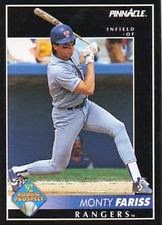
Never Heard of Him - Monty Fariss

Today’s blog focus stems from a recent visit to Slugger Field, where I was able to tour the inner workings of the facility.  I got to see the player lounge, locker room, batting cages, all of the typical stuff.  They also have several pictures, team stats, etc.  Then, for some reason, they have the entire 1989 Topps baseball card set, in several uncut sheets, on the walls of one large room.  I’m guessing because they could probably purchase them for just the cost of the cardboard they’re printed on.  Honestly, the frames cost more than the card sheets.

Valuable or not, being that this set was from when I was 10 years old, I instantly thought this was cool.  I spent a good amount of time examining the sheets.  I snapped a picture of a group of six cards that was probably one of the greatest and/or saddest things ever.  Going clockwise, the players are George Brett, Roberto Alomar, Ron Gant, #1 Draft Pick Jim Abbott, #1 Draft Pick Robin Ventura, and #1 Draft Pick…Monty Fariss.

George Brett is a Hall of Famer with 3154 hits, 317 home runs and a career batting average of .305.  He’s the only player to win a batting title in three different decades – 1976, 1980, and 1990.

Robert Alomar is also a Hall of Famer.  He finished with 2724 hits, 210 home runs, 474 stolen bases and a career batting average of .300.  His career fielding percent was .984.

Fariss never graced the
cover of Sports Illustrated.
Ron Gant is not a Hall of Famer.  As a matter of fact, he didn’t receive a single vote when he was first eligible in 2009.  While not a Hall of Famer, he was a very effective player in his prime.  He hit 20 or more home runs seven times, and stole more than 20 bases five times.  His career numbers are 321 home runs and 243 stolen bases.

Everything you need to know about Jim Abbott you can read in my earlier blog post, but in case you haven’t gotten to it yet, Abbott won 87 games in his 10 year career, striking out 880 across 1674 innings.  He did this despite being born with one hand.

Robin Ventura was also a very effective player across his 16 year career.  He was a two time all star and a six time Gold Glove winner.  He hit 20 or more home runs nine times, finishing with a career total of 294.  Despite only batting .267 in his career, his on base percentage was nearly 10% higher at .362.  He also threw one inning of shutout ball in his last season with the Dodgers in a 13-0 loss to the Angels.

And now we get to the main event – Monty Fariss.  Fariss was drafted out of Oklahoma State University as the sixth overall pick in the 1988 draft by the Texas Rangers.  The shortstop was assigned to rookie-ball Butte of the Pioneer League where he would turn heads by hitting .396 and four home runs while walking 20 times vs. only seven strikeouts across 77 plate appearances.  He was quickly promoted to AA Tulsa where he came back to earth, only hitting .224 with three home runs and 22 walks vs. 39 strikeouts.

1989 saw Fariss return to Tulsa, and he had some better results.  His average increased to .272, but his slugging percentage actually fell about 20 points.  He only had five home runs, and had 64 walks vs. 112 strikeouts.  That would be pretty good for a shortstop still more than two years younger than the league average, until you look at his .928 fielding percentage.

He would return to Tulsa yet again for the start of the 1990 season.  This time, he brought his average all the way up to .299 while hitting seven home runs.  That earned him a promotion to AAA Oklahoma City where he would hit .302 the rest of the season with four home runs.  Across both stops, he had 70 walks vs. 108 strikeouts.

He started the 1991 campaign back in Oklahoma City.  His average fell back to .271, but he increased his power, hitting nine triples and 13 home runs.  His walks jumped all the way to 91, but his strikeouts increased to 143.

Boy, you're going to lead the
league in HIT BY FISTS!
The Rangers decided it was time to call up the 23 year old Fariss.  He would make his major league debut on September 6th in an 11-6 loss to the White Sox.  Fariss would hit leadoff as the DH and go 0-2 with two strikeouts.  This looks like a fun game.  It featured Bo Jackson hit a double off of Nolan Ryan, a Ryan HBP of Robin Ventura (this was before their “incident”), and Julio Franco falling a double short of the cycle.  It was the exact opposite of a pitcher’s duel, with the pitchers combining for 17 hits and 20 walks.  Fariss would finish his first taste of the bigs hitting .258 with a double, a home run, six RBIs, and seven walks vs. 11 strikeouts while playing left field and second base.

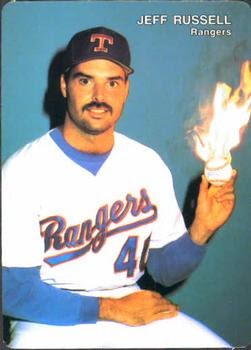
1992 would find Fariss in left field on Opening Day.  He was 0-2 with a walk and a strikeout before being pulled in the top of the eighth inning for pinch hitter Kevin Reimer.  The Rangers would erupt for NINE runs in the top of the eighth to put them up 12-8.  The Mariners scored two runs in the bottom of the frame, but that was as close as they would get as Jeff Russell would come in to shut the door for the save.  A score of 12-10 doesn’t sound like your typical game started by Nolan Ryan and Randy Johnson, but this was more of a reflection of the early 90’s bullpens of the Rangers and Mariners, as they were responsible for 16 of those 22 runs allowed (and the Rangers defense was also responsible for a couple).

Fariss would only appear in 16 games in April and May before being sent back down to Oklahoma City.  Through mid-July, Fariss would hit .299 in the minors before being called back up.  Unfortunately, that success would not carry over to the majors, as for the season, he finished hitting .217 with seven doubles, a triple, three home runs, 21 RBIs and 17 walks vs. 51 strikeouts playing left field, center field, right field, and second base.

Fariss on his way to the
ballpark in June, 1993
After the 1992 season, Fariss was left unprotected against the expansion draft and was drafted by the Florida Marlins.  After hitting just .172 with two doubles, one triple and two RBIs with five walks vs. 13 strikeouts, he was sent to AAA Edmonton.  Since his last major league game was on June 1st, and the one week Alberta summer was still a couple of months away in Edmonton, he only hit .256 finishing out the season in the minors.

1994 would see Fariss back in Edmonton.  This time, better equipped for the extreme conditions, over the course of the season he hit .285 with 32 doubles, four triples, 20 home runs and 60 RBIs with 55 strikeouts vs. 99 walks.

He signed with the Cubs for the 1995 season.  After just 10 games and a .182 batting average, that was the end of the line for Fariss.  He packed his bags for warmer weather, heading to play for Monterrey in the Mexican League.

All of this is probably more than you knew, or even cared to know, about Monty Fariss.  For his career, he was a .217 hitter with four home runs and 29 walks vs. 75 strikeouts.  But he never made one single error in his career!  He was perfect in 133 chances.  Despite being drafted as a shortstop out of college, he never made a single appearance there in his career.


Don't Fariss me, bro!
Hey!  Texas Rangers!  You drafted a shortstop and screwed around with him, playing him at five different other positions and he ultimately failed as a major leaguer.  Sound familiar?  Learn from your mistakes from 20 years ago!

Tuesday, April 15, 2014

1994 Rookie of the Year Countdown - Bobby Jones

This is the fourth edition of our Tuesday look at the countdown to the Rookies of the Year in 1994.  Today we examine former Mets and Padres right hander Bobby Jones.

Robert Joseph Jones was drafted in the first round (36th overall) in the 1991 draft out of Cal State Fresno.  The Bulldogs have produced an astounding 48 major league players, including Kevin Appier, Terry Pendleton, Jeff Weaver, Doug Fister and Matt Garza.  This was after attending Fresno High School, which happened to have produced Hall of Famers Frank Chance and Tom Seaver.  After his signing, he was assigned to single A Columbia where he quickly turned heads by going 3-1 with a 1.85 ERA and 35 strikeouts vs. just three walks.


In 1992, he was promoted to AA Binghamton, where he would go 12-4 with a 1.88 ERA and 143 strikeouts vs. 43 walks.  He threw four complete games, all shutouts.  Promoted again in 1993, he went 12-10 with a 3.63 ERA at AAA Norfolk.  He had 126 strikeouts vs. 32 walks.  He also hit 11 batters and had 11 wild pitches that year.  Despite than those minor hiccups, the Mets decided it was time to bring him up.

Jones made is major league debut on August 13th, 1993 in a 9-5 victory over the Philadelphia Phillies.  At this point in the season, the Mets were 39-76, 34 ½ games back of those same Phillies.  Throwing Jones right into the fire, he would start that day, and over six innings, he would give up seven hits, one walk and five runs (only one earned) while striking out three.  Backed by second baseman Tim Bogar’s monster day at the plate – two home runs and two doubles with four RBIs – Jones would get the win.  Although I’m not going to examine every game of the season, I declare this was the high point for the Mets that year.

Things would not be as smooth for Jones the rest of the season, as he went 2-4 with a 3.65 ERA in nine starts.  The Mets were not very good at much that season, including defense.  Jones gave up 35 runs, with only 25 of them earned.  His last start of the season was his best, throwing 10 shutout innings vs. the Cardinals as the Mets won 1-0 in 17 innings when Jeff Kent doubled in Eddie Murray.

In 1994, the Mets were not quite as bad, but their numbers were certainly not good.  They only had one player bat over .300 – Rico Brogna, in 138 plate appearances, hit .351.  Jones and recent blog topic Bret Saberhagen were the only two pitchers to win more than 10 games, and they and Pete Smith were the only pitchers that would start more than 10 games.

Jones would start the third game of the season for the Mets in Chicago vs. the Cubs.  I think we all remember what happened a couple of days earlier (Tuffy Rhodes) but after that series, the Mets were 3-0 due to Jones’ seven innings pitched where he allowed just one run and two walks with three strikeouts.  In his next start, also against the Cubs five days later, he wouldn’t fare as well as he allowed six runs in just 2 1/3 innings.  He would finish the month with a 3-1 record and 19 strikeouts vs. 16 walks (including seven on April 27th).

His first start of May would see Jones only go 2 2/3 innings pitched where he would allow nine runs, none of which were earned.  From what I can tell, this is a major league record.  Other teams have scored that many unearned runs, but they were never allowed by one pitcher.  The third inning was the culprit that day.  Jeff Reed grounded out to short.  Giants starter Mark Portugal singled to center field.  Darren Lewis bunted out to Jones.  Then, Jose Vizcaino booted John Patterson’s grounder to short.  Matt Williams would homer in the next at bat, Barry Bonds would single, steal a base, score, etc.  The inning even featured another error that prolonged it even further.  The Giants would win 10-3.  The rest of May was better for Jones, as he ended the month 3-3 with a 3.10 ERA and 20 strikeouts vs. 13 walks.

June was another month of ups and downs for Jones.  In his first two starts, he had a loss and a no decision, giving up 8 earned runs in 14 1/3 innings.  In his third start, he threw eight shutout innings, allowing four hits and no walks in a 1-0 victory over the Phillies.  Then, in his last two starts of the month, the Mets defense was once again unkind, as he lost both starts, allowing 12 runs – only seven earned – in 9 2/3 innings.  He would finish the month 1-3 with a 4.22 ERA and 14 strikeouts vs. eight walks.

July would see Jones get back on track.  He had two no decisions where he gave up nine runs in 14 innings, but in his four wins that month, he gave up six runs in 26 2/3 innings.  For the month, he was 4-0 with a 2.88 ERA and 20 strikeouts vs. 14 walks.  He also only allowed one home run in 40 2/3 innings that month.
He would get a couple of more starts in August as the season wrapped up, going 1-0 with a 1.76 ERA and seven strikeouts vs. five walks.  In what would foreshadow a classic Bobby Jones start, his last start of the season saw him get the win, as he danced around 10 hits and a walk across 7 1/3 innings.

Jones finished the year with a record of 12-7, an ERA of 3.15, one complete game and shutout, 80 strikeouts and 56 walks in 160 innings pitched.  That was good for a 2.4 WAR, which isn’t too bad for a rookie starting pitcher.  His ERA ranked eighth in the NL that year, but it was still over twice as high as leader Greg Maddux’s 1.56.  That season, he only gave up 10 home runs.  Other than his cup of coffee in 1993, that was the only season where he gave up fewer than 20 home runs, other than his injury-shortened 1999 season where he only pitched in 12 games.

Jones would pitch in New York through the 2000 season.  He was an All Star in 1997 when he went 15-9.  Other than his eighth place Rookie of the Year finish in 1994, that was the only time he was ever voted for any sort of award.  The only thing Jones would ever lead the league in was in 2001, the first year of his two year stint in San Diego.  He would lead the league with 19 losses, and also tied for the league in home runs allowed, somehow serving up 37.  It takes a special talent to give up that many homers in San Diego.  A special kind of talent like Jones, and his Padres’ teammate Kevin Jarvis, who also gave up 37.  The was also one other guy that gave up 37 home runs that year – a guy named Curt Schilling.  Things worked out ok for him, though.  Well, sort of.

THAT SHIRT.

For his career, Jones would finish 89-83 with a 4.36 ERA and 887 strikeouts vs. 412 walks across 1518 2/3 innings pitched.  He wasn’t part of the Mets mid-90’s future known as Generation K – Bill Pulsipher, Jason Isringhausen, and Paul Wilson – but combined with these three, the Mets future looked bright.  It was, culminating with their appearance in the 2000 World Series.  Unfortunately, it wasn’t with any contribution from Generation K.  Jones would go 11-6 for the Mets that year.  Pulsipher would start two games, losing both of them and giving up nine runs in 6 2/3 innings.
No relation.
Also, just for laughs, the Mets also had another pitcher named Bobby Jones that year.  On July 3rd, Bobby Jones started.  Bobby Jones also started on July 4th.  Well played, Mets.  I can appreciate the humor in that.

Friday, April 11, 2014

Happy Birthday Bret Saberhagen!

Today, Brett Saberhagen turns 50 years old.  Let’s take a look back at highlights of his career, and then an examination of a couple of his better seasons – 1989 and 1994.

Saberhagen was drafted by the Kansas City Royals in the 19th round (480th overall) of the 1982 draft out of Grover Cleveland High School in Reseda, CA.  Fellow 19th rounders from that year combined for -0.1 WAR in a total of 21 major league games.  I hope that scout got a nice bonus.

Saberhagen was assigned to single A Ft. Myers to start his professional career, then, after going 10-5, he was promoted to AA Jacksonville.  In the minors in 1983, as a 19 year old, he would combine for a 16-7 record with a 2.91 ERA, 130 strikeouts vs. just 48 walks, and five complete games (two shutouts) in 187 innings.  A 19 YEAR OLD THREW 187 INNINGS.  Not sure what his workload was in high school, but I’m guessing this was quite a jump.  Perhaps this would be why he would deal with arm troubles the second half of his career?

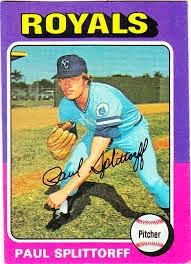
Anyway, the Royals thought he had proved enough in that one minor league season, so he would start the 1984 season with the big club.  He made his major league debut on April 4th of that year in relief of Paul Splittorff vs. the New York Yankees.  Splittorff didn’t have it going that day, and lasted just 3 1/3 innings and giving up four runs.  Saberhagen came in and proceeded to throw 4 2/3 innings of shutout ball, allowing only three hits while striking out and walking none.  He kept them in the game, but the Royals still lost 4-3.  Splittorff would get the loss, and opposing Yankees pitcher Phil Niekro would pick up the 269th victory of his career.

Other highlights of his rookie season include his first career start and win vs. the Tigers on April 19th, his only career save vs. the Blue Jays on July 23rd, and his first career shutout on September 24th, a 3 hit effort vs. the Angels.  He would finish his rookie campaign with a 10-11 record in what could be described as a “sixth starter” role.

The following season was a magical one for way-too-young-to-be-throwing-that-many-innings pitchers.  Saberhagen, at the age of 21, combined with Dwight Gooden, at the age of 20, to go 44-10 on the season in 235 1/3 and 276 2/3 innings respectively.  Each Cy Young award winner carried their team towards the playoffs, with the Royals making it, but the Mets falling just short.

Saberhagen’s 1985 saw him go 20-6 with a 2.87 ERA.  He had 158 strikeouts vs. just 38 walks.  He threw 10 complete games, but only had one shutout against the Brewers on May 17th.  He definitely finished strong that year, going 13-2 after July 1st.

The next three seasons saw decent numbers for Saberhagen.  He went 39-38 with a 3.71 ERA.  He would average 225 innings pitched over those seasons.

Then, in 1989, Saberhagen would go 23-6 on his way to his second Cy Young award.  Throwing 12 complete games, with four shutouts, on his way to 262 1/3 innings pitched, he would strike out 193 and only walk 43.  Just like 1985, he started slow.  He had his third-to-last relief appearance of his career on April 16th, a day after he gave up five runs to the Blue Jays in 2/3 of an inning.  Combined with three runs that day, he gave up eight total in three innings pitched.  He was now 1-1 with a 5.00 ERA.  Then, after July 1st, he went 17-2 to finish the season.

He would spend two more years in Kansas City, going 19-18 and only averaging 166 innings those two years.  On December 11th, 1991, he was traded with Bill Pecota to the New York Mets for Gregg Jefferies, Kevin McReynolds and Keith Miller.

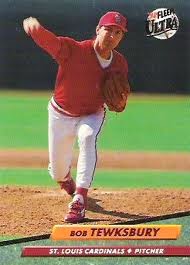
The first two years as a Met saw Saberhagen struggle to stay on the mound.  He went 10-12 and only averaged 118 innings pitched.  He was still a control artist though, striking out 174 and only walking 44.   In 1993, Saberhagen would have a K/BB ratio of 5.47, which was a career high.  Actually, had he pitched enough innings to qualify, it would have led the majors.  And it wouldn’t even have been close.  Bob Tewksbury led the majors with a ratio of 4.85, followed by Jimmy Key (4.02), Greg Maddux (3.79), Jose Rijo (3.66) and John Burkett (3.62).

No one had a ratio as high as Saberhagen’s since Dennis Eckersley in 1985 with a 6.16 ratio, and you’d have to go all the way back to 1971 before that, when Fergie Jenkins had a ratio of 7.11.  While he could have sat back and admired what he had accomplished, instead he decided that he would just go out and DOUBLE that the following season.

DO NOT Google
Candy Cummings with
children in the room.
In the modern era, only two pitchers have had a K/BB ratio of more than 10 – 2010 Cliff Lee at 10.28 and 1994 Saberhagen at 11.00.  I could go on and on about some of the numbers from the early days of the league, as some of these numbers look a bit incomplete.  Cy Young led the league in K/BB ratio in 1893 at 0.99.  He walked more batters than he struck out, AND STILL LED THE LEAGUE.  Then, there was unfortunately named Hall of Famer Candy Cummings who, in 1875 in 416 innings struck out 82 batters.  And walked four.  FOUR.  That is a 20.50 ratio.  I find that a bit hard to believe.

Back to Saberhagen.  His 1994 season, the first year he had been healthy since the 1991 season, was unfortunately ended early because of the strike.  Short season numbers are always skewed a bit, and more than likely, this was no exception.  But remember, Saberhagen was always a slow starter, and although he didn’t start as slow as usual, still, at the end of April, he did have a 3-1 record, but he had 23 strikeouts vs. five walks.  That’s pretty good, but not historic.

In May, he would strike out 27 batters and only walk ONE.  June was even better with 40 strikeouts and only THREE walks.  He would add one more strikeout in July to clock in at 41 vs. 3.  He’d finish up August with 12 strikeouts and one walk.

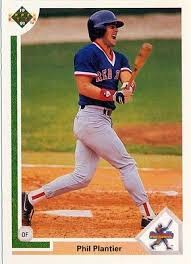
Those 1994 Mets weren’t a particularly good team, so he lost a lot of low scoring games.  Otherwise, he very well may have made a run at 20 wins that season.  In his four losses that year, he gave up four, three, five and three runs.  In his six no decisions, he gave up three, two, six, one, ZERO and two.  The zero run effort was over 10 innings in the night cap of a double header vs. the Padres on July 15th, a game that the Mets would eventually lose 2-1 in 14 innings when Tony Gwynn and Phil Plantier went back to back off of Mike Maddux.

Despite setting the all time record for K/BB ratio, and that excellent 14-4 record, Saberhagen would finish third in the Cy Young award voting behind Greg Maddux and Ken Hill.  Maddux was filthy that year.  He threw 202 innings, went 16-6, struck out 156 and only walked 31, and only gave up four home runs.  His ERA was 1.56 and WHIP was 0.896.  And Ken Hill had 16 wins.  That was two more than Saberhagen, so, you know.

This blog is full of
unfortunate names.
Saberhagen would only have another half a season in New York, as he would be traded to the Rockies on July 31st, 1995 with a player to be named later (David Swanson) for Arnold Gooch and Juan Acevedo.  He wouldn’t play at all in 1996, and he signed with the Red Sox in the offseason that year.

He spent some time in the minors in 1997, eventually making it back in late August, throwing 26 innings over six starts.  He would win the Comeback Player of the Year award in 1998, when he went 15-8 for the Sox.  He missed most of May and parts of June in 1999, but still finished with a 10-6 record.  More injuries would keep him out of the majors in 2000, and in 2001, he would pitch his final game on August 7th.

Saberhagen would finish his career with a 167-117 record, a 3.34 ERA, 1715 strikeouts and 471 walks.  He had the two Cy Young awards, along with the third place finish, was a three time All Star, a Gold Glove winner, and finished in the MVP voting three times.  He finished with a career WAR of 59.1, which ranks 61st all time among pitchers.  His career K/BB ratio of 3.64 is good for 12th all time.  He was a WorldSeries MVP in 1985 when, at the age of 21, he threw two complete game victories vs. the Cardinals.


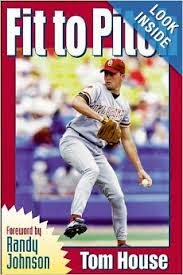
If Saberhagen had been subjected to some of the pitch/inning limits we have nowadays, he very well may have prolonged his career.  Unfortunately, he was caught in that window of time vs. the old guard with guys like Niekro and Nolan Ryan, and modern pitching philosophy.  Hopefully no one gives him a copy of Tom House’s Fit to Pitch for his birthday.

Tuesday, April 8, 2014

1994 Rookie of the Year Countdown - Jose Valentin

This is the third edition of our Tuesday look at the countdown to the Rookies of the Year in 1994, today we examine former Brewers and White Sox shortstop Jose Valentin.

Valentin was signed by the San Diego Padres in 1986 out of Fernando Callejo HS in Manati, Puerto Rico.  That high school has produced four other major leaguers, including younger brother Javier Valentin and some guy named Carlos Beltran.  The following season, he was sent to Spokane of the Northwest League where he hit .250 with an OPS of .670.  That’s not too bad I guess for a 17 year old, but combined with his .914 fielding percentage, he still had some way to go to be ready for prime time.

By the time that 1991 came around, at AA Wichita, he raised his average all the way to .251, but with his increased pop (17 home runs), he raised his OPS to .771.  His fielding was still an ugly .939 though.  But with the Padres acquiring franchise shortstop Tony Fernandez for the 1991 season, there was no room for Valentin, so he was flipped with Ricky Bones and Matt Mieske to the Brewers for Geoff Kellogg and Gary Sheffield.  Fernandez would only be with the Padres for one more season.

Valentin was seemingly blocked again in Milwaukee in 1992 with Pat Listach having the best season of his career on his way to the Rookie of the Year award that year.  Valentin would make his major league debut on September 17th of that season, pinch running for Hall of Famer Paul Molitor in a 10-4 blowout of the Red Sox.  Roger Clemens allowed eight runs that game, but only three were earned on five Red Sox errors.  Valentin would come around to score in the eighth inning on a B.J. Surhoff triple.  He would get his first at bat and career RBI on October 3rd.

Valentin would have to wait until September 8th of the following year to get his first major league hit off of the Royals Hipolito Pichardo in a Brewers 2-1 win.  A week later, he’d get the first home run off of Yankees hurler Rich Monteleone.  He’d finish the 1993 season with a .245 average and a home run in 19 games.

By this time, the Brewers figured he had nothing left to show in the minors, so for the 1994 season, he would have full time employment.  The fact that Listach totally tanked in his sophomore season probably helped them make that decision.  Valentin didn’t start opening day, as that honor went to Brewers legend Bill Spiers, but by the time late April came around, he was the full time starter.  

Through April 20th, Valentin only had two plate appearances in five games, but in the last six games that month, Valentin started five of them.  He didn’t really have anything to show for it though, and his numbers that month hardly screamed Rookie of the Year.  He’d finish April with a .222 average with two doubles, three RBIs, two runs and two stolen bases.  He had four strikeouts vs. two walks.  But with Listach out the rest of the season, someone had to play short.

1995 Leaf has to be one of
my favorite sets of all time.
May was another tough month at the plate for Valentin.  He played in all but four of the Brewers games that month, and he only rewarded them with a .217 average.  He’d add six doubles, two home runs, eight RBI, 13 runs and three stolen bases that month.  He struck out 13 times vs. 7 walks.  After a 13-9 start in April, the Brewers went 7-21 in May.

June would prove to be a better month for Valentin.  He set the pace for the month, collecting three hits on the first day and raising his season batting average from .218 to .242 with that effort.  Overall for the month, he’d hit .287 with five doubles, three home runs, 15 RBIs, 12 runs and one stolen base.  The key to his success was simple – swing at everything.  That month, he had an incredible 26 strikeouts vs. just six walks.

Valentin’s awful batting average returned in July, but he was starting to develop his power.  In a span of six games, he hit his first career grand slam off of the Royals Tom Gordon, and added two more three run home runs.  He finished the month with a .217 average, six doubles, four home runs, 15 RBIs, 14 runs and five stolen bases.  The strikeouts were still high at 27, but he did increase his walks to 18.

In the waning days of the 1994 season, Valentin was not that good, but was consistent.  In the final 10 games in August, he hit .214 with two home runs, five RBIs, six runs and a stolen base.  He had five strikeouts vs. five walks.

Valentin’s final numbers pretty much show you why he finished in ninth place in the voting.  He had a .239 average, 19 doubles, 11 home runs, 46 RBIs, 47 runs and 12 stolen bases.  Not too bad for a bottom of the order rookie shortstop.  He finished second in the league in errors – first as a shortstop – with 20 that season, good for a .954 fielding percent.  Sadly, that was only slightly below his career fielding percent of .960.

Why would they keep trotting him out to play shortstop?  His 249 career home runs rank 209th all time.  That’s good for fifth place all time among shortstops.  And it didn’t stop there.  To get that power in the lineup, Valentin would be sent out to play every position except pitcher and catcher in his career.

Valentin's ninth place finish in the Rookie of the Year voting was the only time he was voted for anything.  He was never an All Star, and never a Gold Glove or Silver Slugger (although with him hitting so many home runs, it’s a wonder he DIDN’T win a Gold Glove).  He hit 10 or more home runs in 11 straight seasons, and the last five of those, from 2000 to 2004, his entire White Sox career, he had 25 or more each season.  He hit 90 home runs in his stint with Milwaukee, which ran through the end of the 1999 season.

Before the 2000 season, Valentin was traded to the White Sox with Cal Eldred for Jamie Navarro and John Snyder.  Valentin then had the best season of his career, hitting a career best .273 with 25 home runs which was also a career high at the time.  He went on to hit a total of 136 with the White Sox, but his batting average fell each year.  By the time 2004 came around, his average was all the way down to .216, and that same year, he hit 30 home runs.  He also had 139 strikeouts.  He was like Adam Dunn without the walks.

That was the beginning of the end for Valentin.  He signed with the Dodgers before 2005.  In an injury shortened season, he only batted .170 with two home runs in 147 at bats.

He had a bit of a resurgence with the Mets in 2006, hitting .271 with 18 home runs while playing first, second, third, left and right.  The following year with the Mets would be his last, as his average fell back to .241 with only three home runs.  He would play his final game on July 20th, 2007, getting a hit off of the Dodgers Brett Tomko in his final at bat.

Speaking of Prime Time...
In combing over his stats, I came across an interesting tidbit from his career.  He actually played in six games for the Louisville RiverBats in 1999.  Affiliated with the Brewers at the time, in six games, he went 5 for 20 with four walks and three strikeouts.  That was good for a .250 batting average, but his OPS was 1.075.  Three of those hits were home runs.


I hope you enjoyed this look at the utterly pedestrian career of Jose Valentin.  By hanging around for 16 seasons, he amassed enough stats to be vaguely remembered.  The next player we will examine is former golfer Mets pitcher Bobby Jones.

Tuesday, April 1, 2014

1994 Rookie of the Year Countdown - Javy Lopez


Continuing our Tuesday look at the countdown to the Rookies of the Year in 1994, today we examine former Braves and Orioles catcher Javy Lopez.

Lopez was signed by the Braves as a free agent out of Puerto Rico in 1987 the day after he turned 17.  Through his age 20 season in 1991, he steadily improved his defense, but not really his bat.  Then, at AA Greenville the following year, he showed up on the “prospect” radar by hitting .321 with 16 home runs.  After that breakout year, he was the 20th ranked prospect in baseball by Baseball America.


That's not how you're
supposed to do it!
He’d get the call to the show on September 18th, 1992 in a 13-3 loss to the Astros.  In something rarely seen in today’s game, he entered the game in the bottom of the eighth despite being the third and last catcher on the bench, as starter Greg Olsen was spelled in the fourth inning by backup catcher Damon Berryhill.  Lopez would double in his first major league at bat.  After another solid season of .305 and 17 home runs at AAA Richmond in 1993, the Braves called him up for good on August 18th, 1993. 

Lopez was the Braves’ Opening Day starter in 1994.  He had a solid April, hitting .286 with six home runs and 18 RBIs.  He’d add 10 runs and three doubles, but struck out 18 times vs. just two walks.  In 19 starts that month, he had at least one hit in 15 of them.  Highlights of the month include a two home run, four RBI performance against the Giants on April 14th.  He was also caught stealing twice in his first five games.  He wouldn’t even attempt it the rest of the year.

May was another solid month for Lopez, at least as far as rookie catcher numbers go.  He hit .271 with two doubles and four home runs, adding eight runs and eight RBIs.  He still didn’t show much plate discipline, striking out 14 times vs. just two walks.  He had another two home run performance vs. the Mets on May 15th.

The rigors of the season started to wear on Lopez a bit in June, as his batting average dipped to .194.  He only had one extra base hit – a double – one RBI, and three runs scored.  He struck out 14 times vs. five walks.

July wasn’t much better for Lopez, as he hit .224.  He had a double and three home runs to go along with seven RBIs and four runs scored.  He had 11 strikeouts vs. three walks.  Add in his .211 average in six games in August, Lopez was probably thankful the strike mercifully ended the season. 


I miss the Expos.
Final numbers for the 1994 campaign for Lopez were a .245 batting average, nine doubles, 13 home runs, 35 RBIs and 27 runs scored in 80 games.  He had 61 strike outs vs. just 17 walks.  That’s what he did at the plate.  In the field, he only made three errors in 597 chances, good for a .995 fielding percent.  He did allow 10 passed balls, and only threw out 23% of base runners, which was only slightly below his career average of 28%.  The worst of that abuse came on June 27th, where the Expos ran wild on him, with Marquis Grissom and Lou Frazier stealing two bags each, and Mike Lansing and Wil Cordero each stealing one.
 
Lopez’ 10th place finish in the NL Rookie of the Year voting that year was just one of a handful of awards he would go on to win.  He was a three time All Star, a Silver Slugger Award winner, and finished in the MVP voting twice, with a top five finish in 2003.  He was also the 1996 NLCS, leading the Braves into the Worlds Series, batting .542 with five doubles, two home runs, six RBIs, eight runs, and he even stole a base.  Unfortunately, he couldn’t continue that success into the matchup with the Yankees, as he only hit .190 with no extra base hits and only one RBI.


Speaking of 2003, that was the year that he hit 43 home runs.  How did that happen?!  Well, you can probably put some theories (or one) together.  Those 43 home runs came in just 129 games.  His previous career high was 34 in 1998 (in 133 games), so it’s not like it was that far off, but it was five years later, and he was coming off a season where he only played in 109 games and hit 11 home runs.  Maybe he had “a little extra help”, or maybe it was just a contract year season.  He would parlay those 2003 numbers into a three year, $22.5 million contract with the Orioles for the 2004 season.


Lopez had a couple of decent seasons in Baltimore before being traded in the middle of the 2006 season to the Red Sox for cash and a player to be named later.  That player was Adam Stern.  Lopez fell off a cliff and played his last game on September 2nd.  Stern would play two games for the Orioles, with no plate appearances.

Cueto has a sad.
Lopez finished his career with a .287 average and 260 home runs.  His 260 home runs are good for ninth all time for a catcher.  The first catcher that comes to mind that could potentially catch him would be Brian McCann, who currently sits at 176 home runs.  Yadier Molina only has 90.  But then again, he IS on pace for 162 this year.